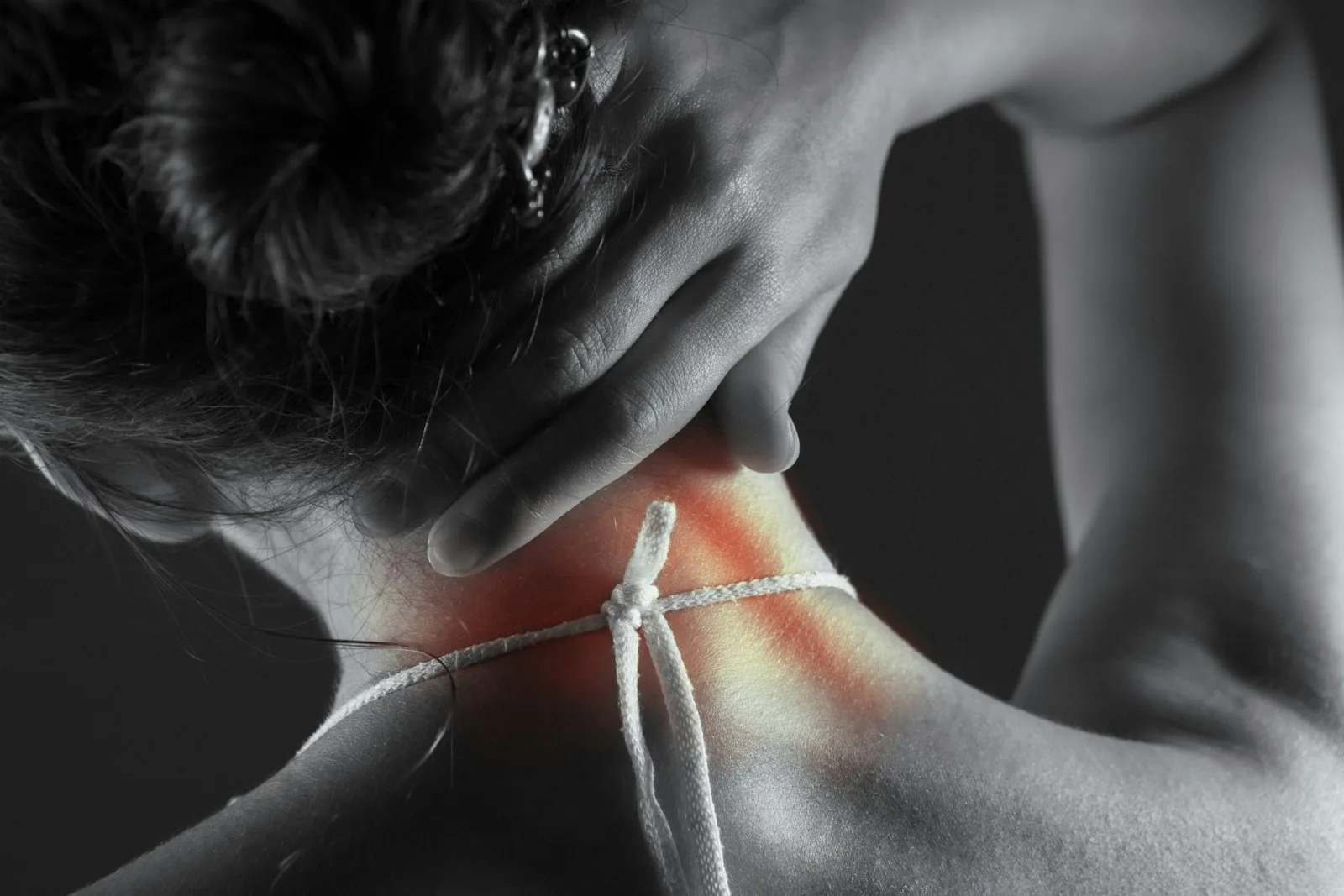
Why Does My Back Suddenly Go? Acute Back Pain Explained

In This Article
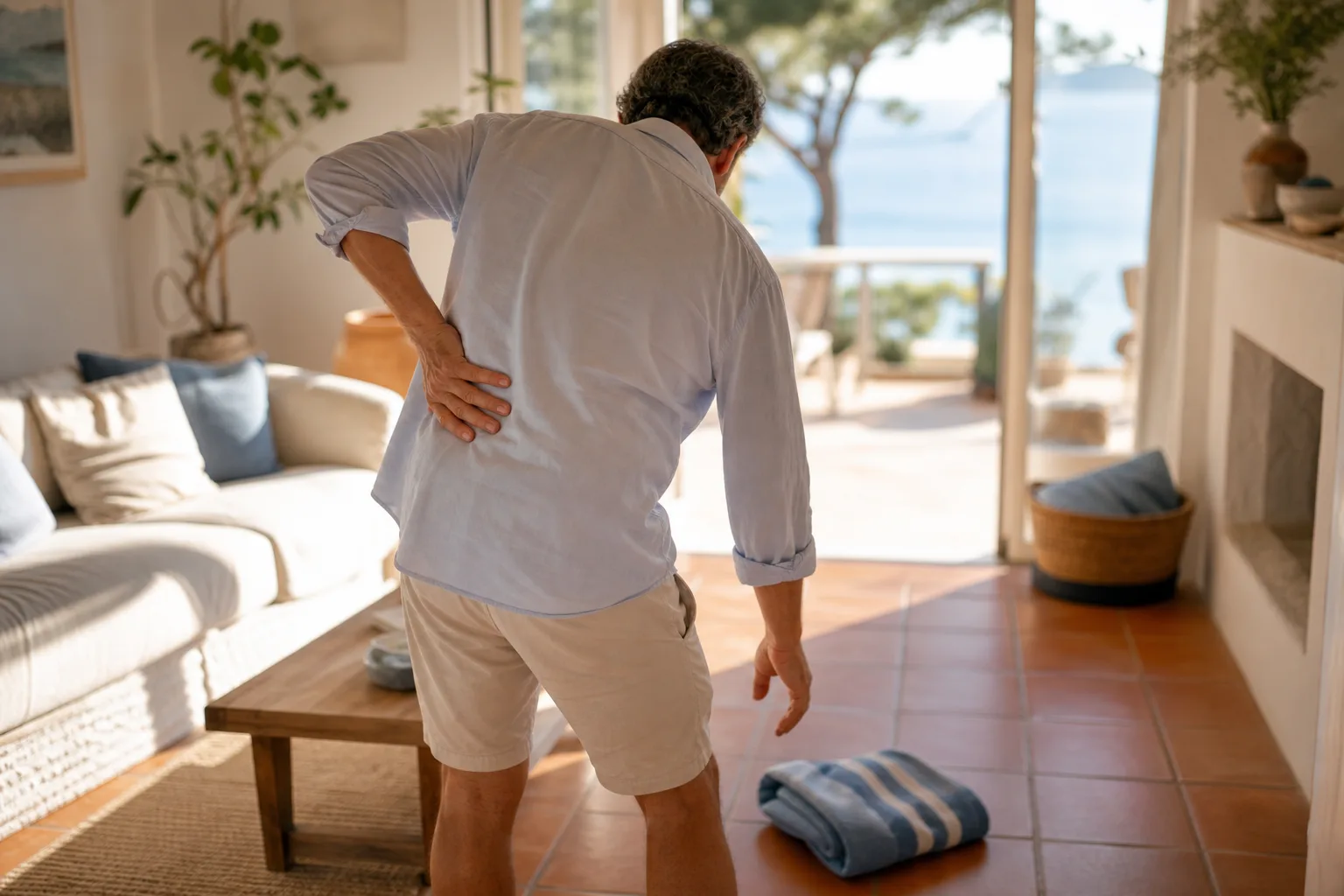
You lean over to pick up a beach towel from the bedroom floor. It is a movement you have made ten thousand times, yet this time something deep in your lower back seizes, your breath catches, and you find yourself stuck at an odd angle, wondering how you will reach a chair.
At Costa Health in Riviera del Sol we hear a version of this story most weeks. A suitcase swung off the airport carousel, or a golf bag lowered into a boot. The movement is ordinary. The reaction feels anything but.
What has actually happened when your back suddenly goes: in most cases this is non-specific low back pain, where no single damaged structure can be identified and the muscles react with intense protective guarding. It feels dramatic, but serious causes are rare, and most episodes improve substantially within six weeks.
Key Takeaways
- When a back “goes” during an everyday movement, it is usually non-specific low back pain with intense protective muscle guarding, and serious causes are rare.
- Keep gently moving from day one. Short, frequent walks and regular changes of position beat bed rest for almost everyone.
- Heat has better evidence than ice for acute low back pain, and paracetamol on its own is no longer recommended.
- A small number of uncommon signs, covered later in this article, are worth a prompt medical check, but they affect very few people.
What Actually Happens When Your Back Goes
Clinicians call this an episode of acute low back pain. Acute simply means recent onset, generally under six weeks, as opposed to chronic pain that has lasted more than three months.
Here is the part many articles skip. In about nine out of ten cases, doctors and physiotherapists cannot pinpoint a single injured structure, which is why the formal label is non-specific low back pain. A muscle, one of the small facet joints that link the vertebrae, or the outer wall of a disc may have been briefly overloaded, but examination and scans can rarely say which. What is clear is the response. The muscles around the area contract hard, what clinicians call protective guarding, and the back stiffens dramatically.
That guarding is often the most dramatic part. A back in full spasm can be so rigid you cannot stand upright, which is frightening. The spasm is generally understood as protective, and while it cannot rule anything in or out on its own, serious spinal causes are rare, affecting only a few people in every hundred who seek care. Pain intensity is a famously poor guide to tissue damage in the lower back.
In almost every case, nothing has slipped, popped out or gone “out of place”. Vertebrae are bound together by some of the strongest ligaments in the body and do not shift because you reached for a towel. The going out feeling is better understood as the moment the nervous system throws on that protective lockdown.
As Daniele Delicati, Physiotherapist at Costa Health, explains: “People arrive convinced they have slipped a disc or cracked something, because the pain is so sharp and so sudden. On assessment, most have a healthy, strong spine with muscles in heavy protective spasm. Once someone understands that guarding response, the fear eases and they move more freely, and in my experience that confidence is often where recovery begins.”
Why Such an Ordinary Movement Sets It Off
Nearly every patient asks why a body that can play eighteen holes or carry shopping upstairs gets defeated by a sock. The most likely answer, in our clinical experience, is that the bend takes the blame while a longer build up did most of the work.
Tissue tolerance is not fixed. Research on back pain triggers points to fatigue, stress and being distracted or awkwardly positioned during a task, and in clinic we see episodes follow a poor night of sleep, a long drive, or a sudden jump in activity. When tolerance is already low, a routine bend can become the final trigger.
Timing plays a part too. Spinal discs absorb fluid overnight and are at their fullest first thing, which makes early morning bending more provocative than the same movement at midday. If your back also feels stiff when you wake, our article on why your lower back hurts in the morning covers it in detail.
None of this says much about how strong or fragile you are. We see sudden episodes in sedentary office workers and in fit golfers alike.
What to Do in the First 48 Hours
What you do in the first two days will not make or break your recovery, but it sets the tone, and the evidence points firmly in one direction. People who keep gently moving tend to do better than those who take to their beds, and NHS guidance has said as much for years.
Move little and often
In the first hours, find a position of relative ease and use it in short spells. Many people find lying on their back with knees bent and a pillow under them comfortable, or on their side with a pillow between the knees. Neither is a treatment, just a way to get comfortable. Then get up and walk, even if only to the kitchen and back.
Avoid long stretches of sitting if you find them aggravating, as many people do, and let pain guide the size of each movement rather than stopping movement altogether. As the worst begins to settle, gentle movement can be built up gradually. Our guide to the best exercises for back pain explains how to choose a safe starting point and which movements to be careful with.
Quick Tip: Try changing position roughly every half an hour in the early days, whether that is lying down, walking or standing at the kitchen counter. There is no magic interval, but regular changes help stop the back stiffening into one guarded posture.
Heat, ice and pain relief
Heat has the better evidence, though not by a wide margin. A Cochrane review found heat wrap therapy gave a small short term reduction in pain and disability in acute low back pain, though later overviews judged the evidence low certainty, and evidence for ice is too limited to draw conclusions either way. A covered hot water bottle or heat wrap used in short spells is a reasonable comfort measure. Follow the product instructions and never fall asleep on it. If ice feels soothing on the first day, brief use over a cloth is unlikely to do harm.
For medication, guidance from the National Institute for Health and Care Excellence (NICE) advises against using paracetamol on its own for low back pain. Anti-inflammatory medicines such as ibuprofen may help when used at the lowest effective dose for the shortest time, but they are not suitable for everyone. A pharmacist at your local farmacia can advise, and you should check with a pharmacist or doctor first if you have stomach, kidney, liver or heart problems, have asthma, take blood thinning medication or other regular medicines, or are pregnant.
When should you see a doctor?
Most episodes settle without any medical input at all, and the signs worth a prompt check affect very few people, but they are worth knowing about. If back pain comes with numbness or pins and needles around your genitals, inner thighs or back passage, new difficulty passing urine, loss of control of your bladder or bowels, or weakness or numbness in both legs, doctors will want to rule out a rare condition called cauda equina syndrome, so arrange to be seen the same day, and in Spain calling 112 is the quickest way to do that. The same goes for back pain that began after a significant accident such as a fall or a road collision, when a spinal injury needs to be ruled out. It is also sensible to see a doctor promptly, though without the same urgency, if back pain comes with fever or feeling generally unwell, unexplained weight loss, or if you have osteoporosis or take long term steroid medication and the pain started after even a minor stumble.
How Long Until It Settles
Acute episodes usually improve faster than people fear in that first awful hour. For many, the sharpest pain and spasm begin to ease within days, and research pooling thousands of cases shows substantial average improvement across the first six weeks. Recovery is not always complete or tidy, though, and some people carry lower level symptoms for longer.
Two caveats deserve honesty. Recurrence is common, with estimates ranging from about one in three people within a year in older surveys to roughly two thirds in a recent prospective study, so rebuilding strength and movement habits after the pain fades matters as much as the first aid. Some people go on to develop pain lasting beyond three months, and persistent fear of movement is one of several known risk factors for that.
You do not usually need a scan. NICE advises against routine imaging for low back pain, and for sciatica, because the result rarely changes treatment, and findings such as disc bulges appear on scans of plenty of pain-free people. Imaging earns its place when one of the warning signs above appears, or when a specialist believes the result would genuinely change your management.
Quick Tip: Track your first week by function as well as pain. Putting socks on unaided, sitting through a meal, walking further than yesterday. Pain can swing from hour to hour, so what you can do is often the steadier measure of progress.
When to Book an Assessment
Plenty of first episodes settle with nothing more than the self care above. Book a professional assessment if the pain is severe, if it is not clearly improving after a couple of weeks, if episodes keep returning, if pain, tingling or numbness spreads down a leg, or if you find yourself moving cautiously weeks later because you no longer trust your back.
In Spain you do not need a GP referral to see a private physiotherapist, so you can book an assessment directly. A clinical assessment screens for anything serious, checks how your nerves, joints and muscles are behaving and, just as usefully, tells you what is not wrong.
How Costa Health Can Help
If your back has gone and you want it looked at properly, our team in Riviera del Sol, Mijas can help:
- Physiotherapy for assessment, manual therapy and a graded rehabilitation programme to rebuild strength and confidence
- Back Pain, Neck Pain and Sciatica Clinic for structured screening when symptoms are severe, recurrent or spreading into the leg
Not sure where to start? Get in touch and we will point you in the right direction.
Quick Tip: Important: This article is for general information only and does not replace professional medical advice. If you’re experiencing symptoms, book a consultation with one of our team so we can assess your individual situation.
Frequently Asked Questions
Is a sudden back spasm the same as a slipped disc?
Usually not. Most sudden episodes are non-specific low back pain with protective muscle spasm, where no single damaged structure can be identified, and they improve over days to weeks. A disc problem becomes more likely if pain spreads below the knee with tingling or numbness, which deserves a clinical assessment rather than guesswork.
How long does it take to recover when your back goes?
Most acute back pain episodes improve substantially within the first six weeks, with the fastest gains usually in the early weeks, though recovery varies and some symptoms can linger. Staying gently active from the first day is linked with better recovery than prolonged bed rest.
Should I use heat or ice when my back suddenly goes?
Heat has the stronger evidence for acute low back pain, although the expected benefit is small and short term. Use a covered heat source in short spells and follow the product instructions. Ice has limited evidence, though brief use over a cloth in the first day is unlikely to cause harm.
Can I go to work with acute back pain?
In many cases yes, and NHS and NICE guidance encourages returning to normal activity, including work, as soon as you reasonably can. Desk workers often find regular changes of position help, while heavier manual jobs may need a short, graded return agreed with a clinician.