Why Breathing Matters for Back Pain, Recovery and Your Nervous System

In This Article

Breathing is more than just getting air in and out of your lungs. The way you breathe can influence back pain, muscle tension, spinal stability and how calm or stressed your nervous system feels. By improving your breathing pattern, you may create a better foundation for movement, recovery and everyday comfort.
At Costa Health we often see that breathing patterns are an important piece of the puzzle for people with back pain, neck tension, recurring injuries or symptoms linked to stress and nervous system overload.
How Breathing Affects Spinal Stability
One of the key muscles involved in breathing is the diaphragm. Its primary role is to help you breathe, but it also plays an important part in stabilising your spine.
The diaphragm works together with:
- the abdominal wall
- the pelvic floor
- the deep spinal stabilisers, including multifidus
- the rib cage and thoracic spine
Together, these structures help regulate intra abdominal pressure and create support around your trunk and lumbar spine. When breathing mechanics are efficient, your body can produce better support and movement control with less effort.
When breathing becomes shallow, mainly in the upper chest, or poorly coordinated, we often see:
- increased tension through the neck and shoulders
- reduced trunk control
- altered posture
- restricted rib cage movement
- increased fatigue during activity
For some people with persistent low back pain, this loss of coordination can contribute to discomfort and reduced resilience during everyday tasks.
Breathing exercises are not a replacement for strengthening or rehabilitation, but they can provide a more stable base so that other treatment and exercise become more effective.
Quick Tip: When you walk or climb stairs, occasionally notice whether your shoulders are lifting with each breath. If they are, gently focus on letting your lower ribs and abdomen move instead, while keeping the shoulders relaxed.
Back Pain and Breathing Patterns
Pain changes how we move, and it can also change how we breathe. When someone is dealing with back pain, they may unconsciously brace, guard or hold tension through the abdomen and chest. Over time this can lead to:
- shallow upper chest breathing
- overuse of neck muscles
- reduced diaphragm movement
- increased lumbar stiffness
- persistent muscular tension
This often creates a cycle:
- pain changes breathing
- breathing changes pressure and muscle coordination
- the body becomes more tense and guarded
- pain becomes harder to settle
Improving breathing mechanics can help interrupt that cycle. When we work on this with patients, they often notice:
- easier, smoother movement
- less tension around the ribs and lower back
- improved awareness of posture
- better tolerance to exercise and rehabilitation
- feeling calmer and less constantly “switched on”
Seek urgent medical help if: Breathing and Your Nervous System
Breathing directly influences the autonomic nervous system, which controls heart rate, digestion, stress responses and recovery. The nervous system is constantly balancing between two broad modes:
Sympathetic mode
- Often described as “fight or flight”
- Higher alertness and increased muscle tension
Parasympathetic mode
- Often described as “rest and restore”
- Associated with recovery, digestion, repair and a feeling of calm
When breathing becomes fast, shallow or frequently held, the body often shifts towards a more alert and protective state. That can feel like:
- tension through the jaw, shoulders or chest
- difficulty switching off
- feeling wired or restless
- increased sensitivity to pain
- poor or disrupted sleep
Slow, controlled breathing can help signal safety to the nervous system. This may support:
- reduced muscle tension
- improved focus
- better sleep quality
- recovery after physical strain
- reduced pain sensitivity
For many people, this is why breathing exercises feel calming quite quickly. It is not just simple relaxation. It is a real physiological input to the nervous system.
Quick Tip: If you wake in the night and feel tense, try breathing in through your nose for a count of 4 and out for a count of 6 for a few minutes. Keep the breath comfortable rather than forced.
Breathing and Injury Recovery
Healing is not only about the injured tissue. Recovery also depends on circulation, movement, sleep, appropriate loading of the tissues and how well the nervous system is regulated.
Better breathing can support recovery by helping with:
- rib cage mobility
- posture and movement quality
- reduced guarding around an injury
- improved exercise and rehabilitation tolerance
- calmer nervous system responses
- better body awareness
This can be especially relevant for people with:
- low back pain
- neck and shoulder tension
- rib irritation
- headaches linked to tension
- sports injuries with guarding patterns
- chronic or long standing pain
A Simple Breathing Exercise to Try
If you would like to explore your breathing pattern, this is a gentle starting point. It should feel comfortable and not forced.
- Sit or lie comfortably, with support for your head and knees if needed.
- Place one hand on your chest and one on your lower ribs or upper abdomen.
- Breathe in gently through your nose.
- Aim to feel the lower ribs expand slightly sideways and the abdomen soften.
- Breathe out slowly through your nose or lightly through pursed lips.
- Keep the shoulders and jaw relaxed.
- Repeat for 1 to 2 minutes.
The intention is not to take a very big breath. The aim is smooth, controlled breathing with less effort and less upper chest lift.
If you feel light headed, short of breath, or uncomfortable at any point, return to your usual breathing pattern and rest. If these symptoms persist, seek medical advice.
When To Seek Professional Support
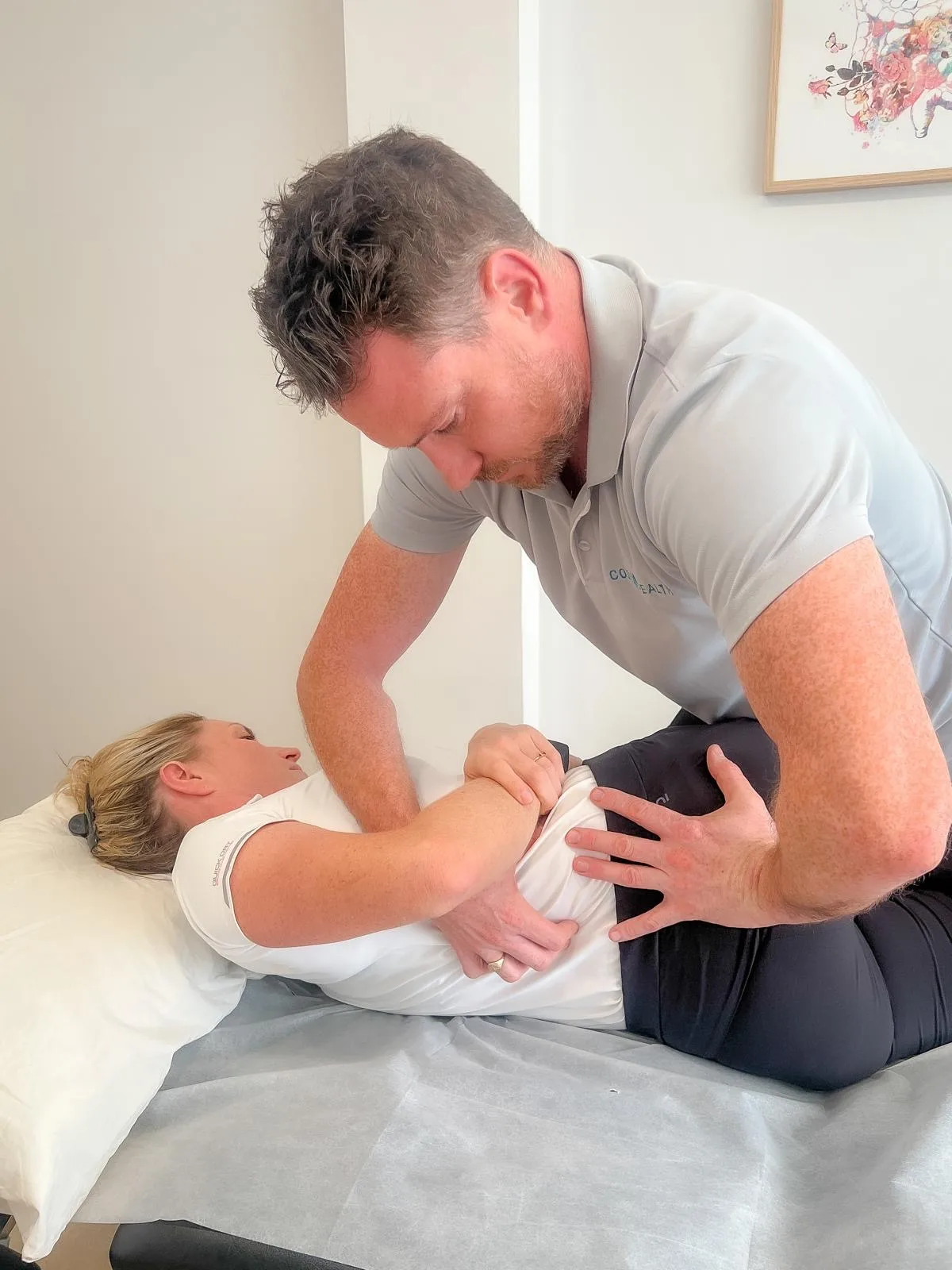
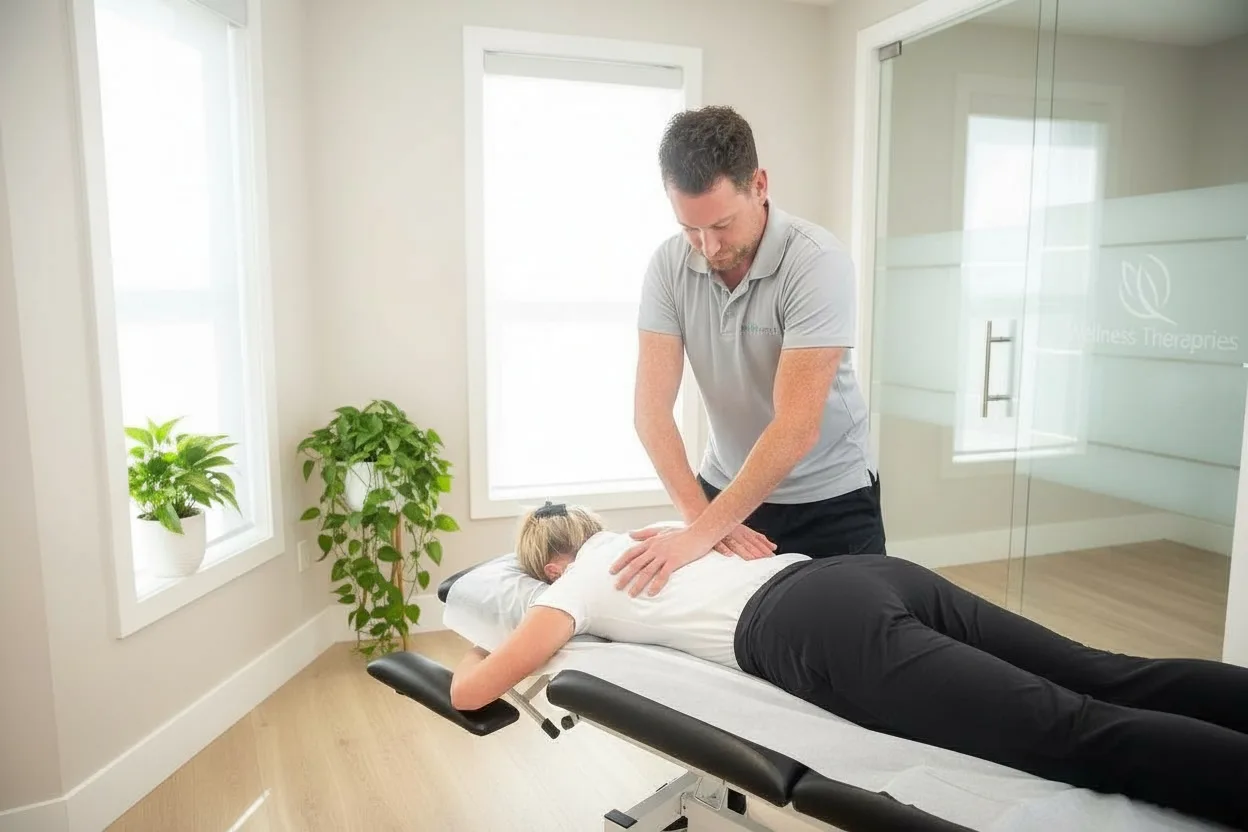
Breathing exercises can be a helpful addition to chiropractic, physiotherapy and sports rehabilitation, but they are not a standalone solution for all pain or injury. If your symptoms are persistent, getting worse, or affecting your ability to work, sleep or enjoy daily activities, a proper assessment is important.
At Costa Health, our team looks at movement, posture, breathing patterns and lifestyle factors together. This helps us understand what may be contributing to your pain and to design a plan that includes hands on treatment, exercise, and simple strategies you can use at home, including breathing techniques where appropriate.
If you are dealing with back pain, tension or a recurring injury, your breathing pattern may be part of the picture. Assessing movement, posture and breathing together can often provide useful insight and help guide recovery.
Frequently Asked Questions
Can breathing exercises cure back pain on their own?
Breathing exercises on their own are very unlikely to cure back pain, especially if the problem has been present for some time. They are usually most helpful as part of a wider plan that may include hands on treatment, specific exercises, gradual return to activity and lifestyle changes. Breathing work can make other approaches more effective by improving spinal support and helping the nervous system feel safer and calmer.
How long does it take to notice benefits from breathing exercises?
Some people feel a sense of calm or reduced tension within a few minutes of focused breathing. Changes in posture, movement control and pain sensitivity usually take longer and depend on the individual. Practising little and often, for example a few minutes most days, tends to be more effective than occasional long sessions. Your clinician can guide you on what is realistic for your situation.
Is there a right way to breathe?
There is no single perfect way to breathe that suits everyone all the time. However, for most adults at rest, gentle nasal breathing with movement of the lower ribs and abdomen, and relatively relaxed shoulders and neck, tends to support spinal stability and a calmer nervous system. If you have lung or heart conditions, or are not sure what is appropriate for you, it is best to seek individual advice before changing your breathing pattern significantly.
Can poor breathing cause neck and shoulder tension?
It can contribute. If the diaphragm and lower ribs are not moving well, the body often compensates by using the neck and upper chest muscles to help with breathing. Over time this can lead to neck and shoulder fatigue and a feeling of tightness. Improving breathing mechanics is one of several strategies that may help reduce this tension, alongside appropriate exercise and manual therapy where indicated.
Are breathing exercises safe for everyone?
Gentle breathing awareness is generally safe for most people, but some techniques, such as very deep or fast breathing, can cause light headedness or discomfort. If you have a history of respiratory or heart conditions, panic attacks, dizziness or fainting, you should speak to a healthcare professional before starting structured breathing exercises. Always stop if you feel unwell and seek medical advice if symptoms persist.