
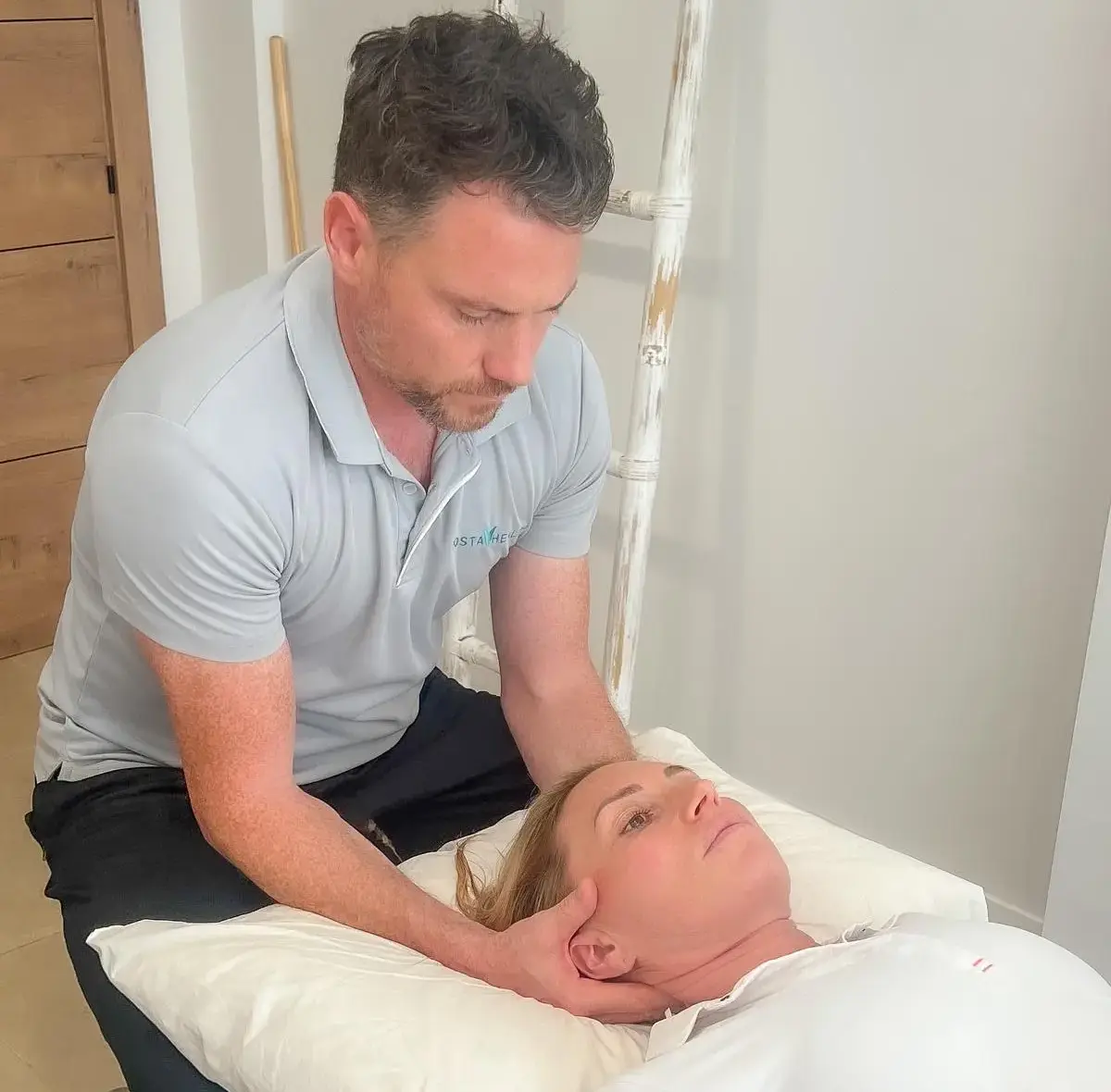
Neck pain does not always present in a straightforward way. For some patients, what begins as intermittent stiffness gradually evolves into a more complex picture, one that raises new concerns and requires careful, considered management. This case, managed by chiropractor Paul Morrison at Costa Health, illustrates how postural habits and cervical dysfunction can combine to produce symptoms that are both surprising and, with the right approach, very treatable.
How It Started: A Familiar Desk-Based Presentation
The patient is a desk-based professional who spends long periods working at a computer and regularly using her phone. Like many people in similar roles, she initially presented with intermittent stiffness in the upper back, a classic presentation of postural syndrome.
These symptoms were largely mechanical in nature and responded well to a combination of chiropractic care for neck pain, including spinal manipulation, soft tissue therapy, and targeted exercise advice aimed at improving posture and muscular support.
Over time, her condition was well managed with periodic treatment and adherence to strengthening and ergonomic recommendations. Then a recent development added a new dimension to her case.
A New Symptom Abroad
While visiting England, she experienced a notable increase in neck pain, particularly on the upper right side. Understandably concerned, she sought medical evaluation and underwent imaging.
The X-ray findings showed some straightening of the cervical spine along with mild osteophytic changes. If you have ever wondered whether you need a scan or X-ray for neck pain, it is worth knowing that findings like these are commonly associated with general wear and tear and are frequently seen in individuals with prolonged postural strain. Importantly, they did not indicate any serious pathology, but they did reinforce the presence of chronic mechanical stress on the cervical structures.
Alongside the increase in pain, she also developed an involuntary twitch. This understandably raised concern and prompted further investigation. After appropriate medical assessment, no serious underlying neurological condition was identified.
Returning to Care: Addressing the Cervical Dysfunction
On returning to Costa Health, Paul focused on addressing the cervical dysfunction through a combination of manual therapy, soft tissue release, and, where appropriate, dry needling. Equally important was the continued emphasis on postural correction and strengthening exercises to support long-term stability.
Quick Tip: If you work at a desk, check that your screen is at eye level and your shoulders are relaxed. Small ergonomic adjustments, made consistently, can significantly reduce cumulative strain on the cervical spine.
As treatment progressed, a clear pattern emerged. As the neck began to regain balance and muscular tension reduced, not only did her pain improve, but the involuntary twitch also began to settle. This points to a likely cervicogenic component to her symptoms, where dysfunction in the cervical spine and surrounding musculature can influence neuromuscular control.
What This Case Teaches Us
There are several useful takeaways from this presentation.
Imaging findings need context
Spinal straightening and mild degenerative changes are often part of normal, age-related or lifestyle-related adaptation rather than direct causes of pain. They should always be interpreted alongside a thorough clinical assessment, not in isolation.
Postural syndrome is more than just stiffness
When left unaddressed, postural syndrome can contribute to more complex cervical presentations. What appears to be a minor inconvenience can, over time, create cumulative mechanical stress that leads to more significant symptoms. Seeking treatment for postural and back pain early can prevent this progression.
Concerning symptoms deserve assessment, not alarm
Even when symptoms appear worrying, such as involuntary twitching, careful assessment and appropriate management can lead to reassuring outcomes. This case demonstrates the value of a thorough, patient-centred approach rather than one driven by anxiety about imaging reports.
Quick Tip: Strengthening the deep neck flexors and upper back muscles is one of the most effective ways to protect the cervical spine over the long term. Ask your practitioner which exercises are most appropriate for your presentation, or explore our exercise guidance for spinal health.
A Note for Desk-Based Workers
This case serves as a practical reminder for anyone with a desk-based lifestyle. Small, consistent changes in posture, movement habits, and muscular strength can have a significant impact on long-term spinal health. If you are experiencing neck stiffness, upper back discomfort, or any new or unusual symptoms, an early assessment makes a real difference.
At Costa Health, our physiotherapy and chiropractic teams work together to provide joined-up care for exactly these kinds of presentations. Whether your symptoms are straightforward or more complex, a personalised assessment is always the right starting point.
Frequently Asked Questions
What is postural syndrome?
Postural syndrome is a mechanical musculoskeletal condition caused by prolonged static positions, most commonly sitting. It typically presents as localised discomfort or stiffness in the neck, shoulders, or upper back, particularly in desk-based workers. Symptoms usually improve with movement and are closely linked to sustained poor posture rather than any structural damage.
What are the common symptoms of postural syndrome?
Typical symptoms include a dull ache or stiffness in the upper back or neck, discomfort after prolonged sitting or screen use, relief with movement or stretching, and muscle tightness rather than sharp pain. In more persistent cases, symptoms can progress to involve the cervical spine and surrounding musculature.
Can poor posture cause neck pain on one side?
Yes. Poor posture can create asymmetrical loading through the cervical spine, often leading to one-sided neck pain. Repetitive habits such as looking down at a phone or working with an uneven workstation setup can contribute to this imbalance over time.
What does straightening of the cervical spine mean?
Straightening of the cervical spine refers to a reduction in the natural curve of the neck. This is often seen on X-ray and is commonly associated with muscle tension or postural strain. It is not necessarily a cause for concern on its own, but it does indicate altered biomechanics and increased muscular load on the cervical structures.
Are osteophytic changes serious?
Osteophytic changes, often referred to as bone spurs, are a common age-related finding. They reflect normal wear and tear within the joints and are frequently seen in people who have no pain at all. Their presence does not automatically indicate a serious problem, though they can contribute to stiffness in some cases.
Can neck problems cause muscle twitching?
In some cases, yes. Dysfunction in the cervical spine and surrounding soft tissues can influence nerve irritation or muscular control, sometimes resulting in involuntary twitching. This is referred to as a cervicogenic presentation. However, any new or persistent twitching should always be properly assessed to rule out neurological causes.
What is cervicogenic dysfunction?
Cervicogenic dysfunction refers to symptoms that originate from the cervical spine, including its joints, muscles, and nerves. These symptoms can include neck pain, headaches, restricted movement, and occasionally referred sensations such as tingling or twitching.
How is postural syndrome treated?
Management typically includes manual therapy such as spinal manipulation, soft tissue release to reduce muscle tension, dry needling where clinically appropriate, postural correction strategies, and strengthening exercises to support the spine. A combined approach tends to provide the most effective and sustainable results.
How long does it take to improve?
Improvement timelines vary depending on the severity and duration of symptoms, as well as how consistently a patient follows advice and exercises. Many patients notice early relief within a few sessions, but long-term improvement relies on consistent postural and lifestyle changes.
When should I seek professional advice for neck pain?
You should seek assessment if you experience persistent or worsening pain, pain following travel or a change in routine, neurological symptoms such as numbness, weakness, or ongoing twitching, or limited movement that does not improve with rest. Early assessment helps rule out serious conditions and allows for more effective management.
Can chiropractic care help with desk-related neck pain?
Yes. Chiropractic care can be highly effective for desk-related neck pain by addressing joint restriction, reducing muscle tension, and improving movement patterns. Combined with ergonomic advice and exercise, it supports both symptom relief and long-term prevention.