
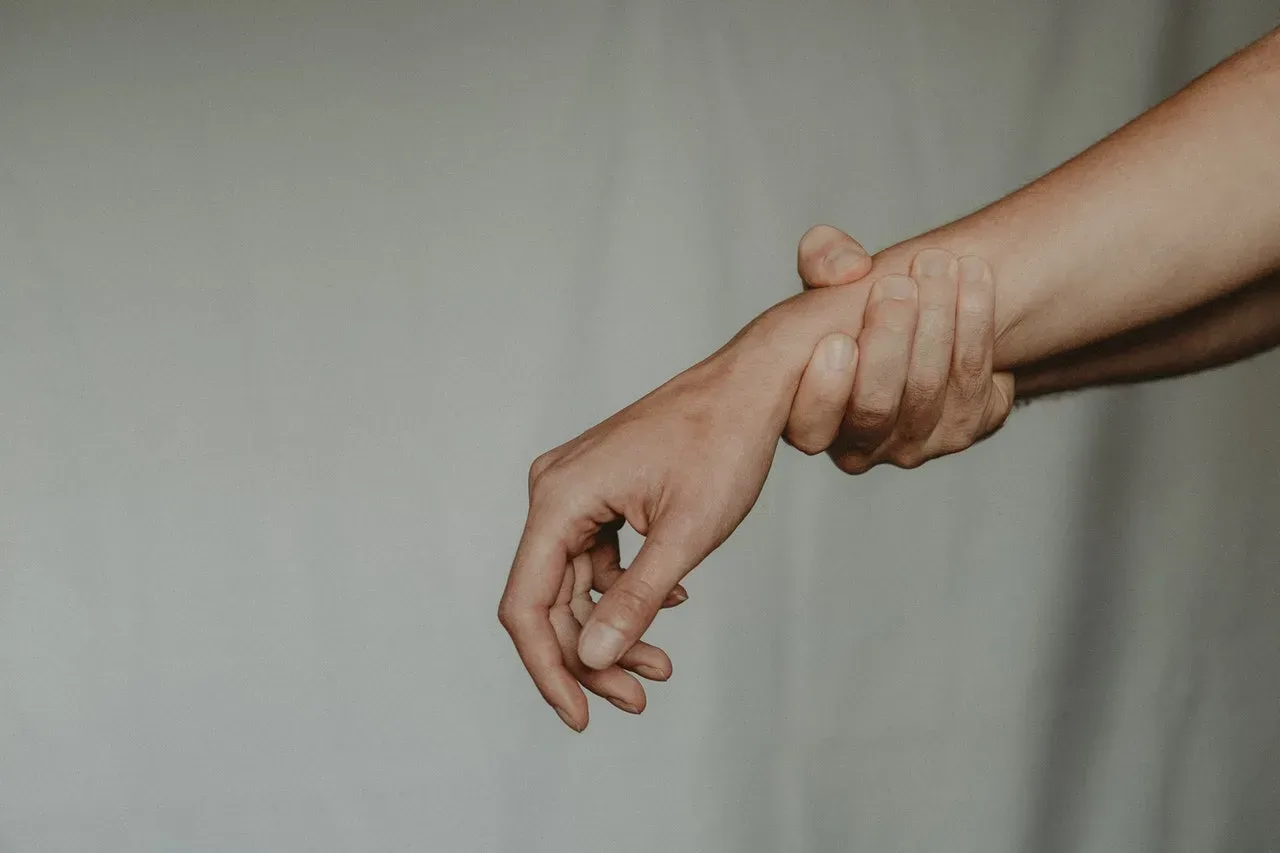

What’s causing your wrist pain?
Wrist pain has three dominant causes in the adult population: De Quervain’s tenosynovitis, carpal tunnel syndrome, and repetitive strain from racquet sports or desk work. Each produces distinct symptoms, responds to different treatments, and carries a different prognosis. Getting the diagnosis right at the first appointment matters, because the wrong treatment for wrist pain doesn’t just fail to help. It can make things worse.
De Quervain’s affects the tendons on the thumb side of the wrist. Carpal tunnel compresses the median nerve as it passes through a narrow tunnel of bone and ligament. Racquet sport injuries, particularly from padel, typically involve the extensor tendons or the triangular fibrocartilage complex (TFCC). The history and clinical tests distinguish these conditions reliably without needing scans in most cases.
How does De Quervain’s tenosynovitis develop?
De Quervain’s is inflammation and thickening of the tendon sheath surrounding the abductor pollicis longus and extensor pollicis brevis tendons as they pass through a tunnel at the wrist’s thumb side. It produces pain with gripping, twisting, and any movement that involves thumb opposition. Lifting a coffee cup, turning a key, or wringing out a cloth becomes painful.
New parents are disproportionately affected. Repeatedly lifting an infant with the thumbs splayed, often combined with the hormonal changes of pregnancy and breastfeeding, is a classic trigger. Research published in Muscle and Nerve found that carpal tunnel syndrome affects up to 62% of pregnant women (Padua et al., 2010), and the hormonal changes that drive it also increase susceptibility to De Quervain’s, making both conditions common during pregnancy and the postpartum period.
The Finkelstein test is the diagnostic standard. Tucking the thumb into a closed fist and ulnar-deviating the wrist produces sharp pain at the radial styloid if De Quervain’s is present. It’s a simple, reliable test that Sarah Monaghan, chiropractor at Costa Health with over 20 years of clinical experience and GCC registration, performs routinely in wrist pain assessments.
Treatment starts with activity modification and thumb spica splinting to offload the affected tendons. Physiotherapy introduces isometric loading exercises once acute irritability settles, progressing to eccentric strengthening. Chiropractic mobilisation of the first carpometacarpal joint and radiocarpal joint restores mechanics that contribute to tendon overload. Sports massage to the forearm extensors and thenar eminence reduces secondary muscle tension that develops around the primary problem. Most patients respond well to conservative treatment within six to eight weeks.
What are the signs of carpal tunnel syndrome?
Carpal tunnel syndrome (CTS) produces tingling, numbness, and pain in the thumb, index finger, middle finger, and the thumb-side half of the ring finger. Symptoms are typically worse at night, often waking patients from sleep. Shaking the hand provides temporary relief, a pattern so characteristic it has its own name: the “flick sign.”
The median nerve passes through the carpal tunnel alongside nine flexor tendons. Anything that reduces the space within the tunnel, fluid retention, thickened tendon sheaths, a previous wrist fracture, or repetitive wrist flexion, compresses the nerve. A 2012 study in The Lancet reported that CTS affects roughly 3-6% of the general adult population, with higher prevalence in women and in occupations involving repetitive hand use.
Common misconception: carpal tunnel is always caused by typing. Research shows that computer use is a relatively weak risk factor compared to manual labour involving vibrating tools, forceful gripping, or sustained wrist flexion. The association between keyboard use and CTS is far weaker than most patients believe.
Osteopathy and chiropractic assessment of the entire upper limb is important because nerve compression can occur at multiple sites simultaneously. The “double crush” phenomenon, where mild compression at the cervical spine combines with mild compression at the wrist to produce symptoms, is well documented. Treating only the wrist while ignoring the neck leaves half the problem unresolved.
Conservative treatment for mild to moderate CTS includes wrist splinting in neutral position overnight, nerve gliding exercises, and manual therapy to the carpal bones and median nerve. Flora Muijzer, physiotherapist at Costa Health (BSc Physiotherapy, Colfisio 13635), uses nerve mobilisation techniques that improve median nerve gliding through the tunnel. When symptoms are severe, with constant numbness or muscle wasting at the base of the thumb, referral for nerve conduction studies and surgical consultation is appropriate.
Why is padel causing so many wrist injuries on the Costa del Sol?
Padel has exploded in popularity across Spain, and Costa Health treats a growing number of wrist injuries related to the sport. The padel racquet is solid, without strings, which means vibration transmits directly through the grip into the wrist and forearm with every ball strike. Poor technique magnifies this effect dramatically.
The most common padel-related wrist problem is extensor tendinopathy on the back of the wrist, caused by the repetitive wrist snap used in overhead smashes. TFCC injuries, which produce pain on the little finger side of the wrist during rotation, occur from the twisting motion of backhand volleys, particularly when the grip is too tight.
Grip pressure is the single biggest modifiable risk factor. Most recreational players hold the racquet far too tightly, especially during defensive shots. This sustained overgrip fatigues the forearm extensors and increases load through the wrist with every impact. A relaxed grip with firm contact only at the moment of ball strike reduces wrist load substantially.
Players transitioning from tennis to padel often struggle because the biomechanics differ. The shorter backswing and emphasis on wrist control in padel places different demands on the forearm compared to the longer, more body-driven strokes in tennis. Overgrip size also matters. A grip that’s too small forces the fingers to work harder, increasing tendon load.
How does Costa Health treat wrist pain?
Assessment involves detailed history-taking, specific provocation tests for each suspected condition, and examination of the entire kinetic chain from the cervical spine through the shoulder and elbow to the wrist. Chiropractic joint mobilisation addresses restricted carpal bones, the distal radioulnar joint, and the radiocarpal articulation. Small positional faults in the lunate and scaphoid bones are a frequently missed source of persistent wrist pain.
Physiotherapy builds a progressive loading programme tailored to the specific diagnosis. Isometric holds progressing to eccentric exercises for tendinopathy, nerve gliding sequences for carpal tunnel, and grip strengthening for return to sport all form part of the rehabilitation toolkit. Osteopathy treats the forearm soft tissue, elbow joint, and shoulder girdle as part of a connected chain rather than treating the wrist in isolation.
Sports massage to the forearm flexors and extensors provides significant relief for patients with chronic wrist pain. The forearm muscles that control wrist and finger movement develop adhesions and trigger points from sustained use, and targeted soft tissue work restores normal tissue quality.
For padel players, Costa Health provides sport-specific rehabilitation that includes racquet grip assessment, strengthening for the specific demands of the game, and graduated return-to-play protocols. Treatment plans for desk workers address ergonomic factors, wrist positioning, keyboard and mouse setup, and break schedules that prevent recurrence.
Patients whose wrist symptoms overlap with De Quervain’s tenosynovitis or broader tendon problems benefit from Costa Health’s multidisciplinary model, where the same patient might see a chiropractor for joint restriction, a physiotherapist for progressive loading, and receive sports massage for muscular tension, all within a coordinated treatment plan. For those with coexisting elbow pain or shoulder pain, the entire upper limb is assessed from the outset.