
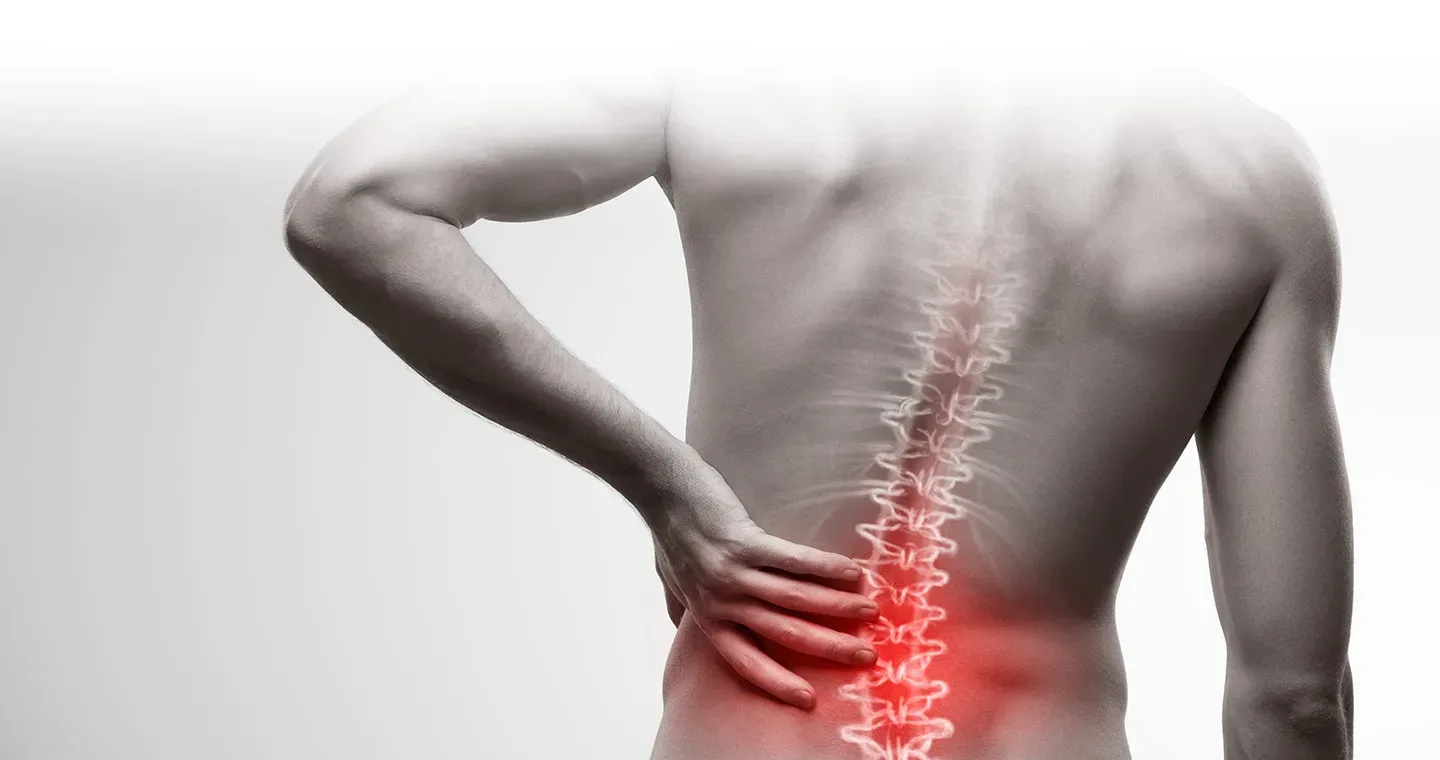

What is back pain, and why does it affect so many people?
Back pain is one of the most common reasons adults seek clinical help. At any given time, roughly 1 in 6 adults across Europe report back pain (Global Burden of Disease Study, Lancet Rheumatology, 2023), making it one of the leading causes of disability on the continent. Most episodes originate in the muscles, ligaments, facet joints, or intervertebral discs of the lumbar spine, and the vast majority resolve with the right combination of manual treatment, movement, and time.
That said, “back pain” is not a diagnosis. It’s a symptom. Two people sitting in the same waiting room can describe identical pain yet have entirely different causes. One might have a disc bulge pressing on a nerve root. The other might have a locked facet joint from sleeping at an awkward angle. Getting the cause right matters, because the treatment path changes depending on what’s driving the problem.
What causes back pain?
The spine is a stack of 24 moveable vertebrae, each separated by a disc and connected by small facet joints. Surrounding this column is a complex web of muscles, ligaments, and nerves. Pain can arise from any of these structures.
Muscular back pain is the most frequent type Paul Morrison sees at Costa Health. A patient presenting with a three-week history of central lower back pain after a long drive from the UK, for example, will often have tight, irritable paraspinal muscles and restricted thoracolumbar movement. Treatment here tends to be straightforward: sports massage or soft tissue release to reduce muscle spasm, followed by spinal mobilisation and a simple exercise programme.
Disc-related pain behaves differently. It’s often worse in the morning, aggravated by bending and sitting, and may refer pain into the buttock or leg. Research published in the Lancet (2018) found that most disc herniations reduce in size over time, and conservative treatment including chiropractic adjustment, osteopathic mobilisation, and targeted rehabilitation produces outcomes comparable to surgery in the majority of cases.
Facet joint dysfunction is another common culprit, particularly in patients over 40. The pain tends to be one-sided, worse with extension and rotation, and can refer into the buttock or groin. A common misconception is that facet pain always requires injection. In practice, manual therapy addressing the restricted segment often provides lasting relief when combined with stability exercises.
Why is back pain so common among desk workers on the Costa del Sol?
Remote workers and digital nomads are a growing part of the population along the Costa del Sol. Many work from temporary setups, laptops balanced on kitchen tables, co-working spaces with non-adjustable chairs, or even poolside loungers. These environments create sustained flexion loading through the lumbar spine.
Prolonged sitting compresses the lumbar discs by approximately 40% more than standing (Nachemson, 1966, validated in later MRI studies). After several months of this, the muscles that stabilise the spine begin to weaken. The deep stabilisers, particularly multifidus and transversus abdominis, lose their timing and endurance. Pain follows.
Costa Health treats this pattern regularly. The approach isn’t simply to crack the spine and send someone home. It involves assessing the full chain: hip flexor length, thoracic mobility, gluteal activation, and sitting posture. Chiropractic adjustment addresses the joint restriction. Osteopathy works well for patients who respond better to gentler mobilisation techniques. Sports massage targets the muscular component. And structured rehabilitation retrains the stabilising muscles to hold the correction.
When does back pain need imaging?
Not as often as most people think. Clinical guidelines from NICE (2020) and the WHO guideline on non-surgical management of chronic low back pain (2023) recommend against routine imaging for non-specific low back pain. Scans frequently reveal incidental findings, disc bulges, degenerative changes, mild spondylolisthesis, that look alarming on a report but don’t actually explain the patient’s symptoms. A 2015 study in AJNR (Brinjikji et al.) found disc degeneration in 68% of pain-free 40-year-olds.
Imaging becomes necessary when red flags are present: progressive neurological deficit (foot drop, saddle anaesthesia, loss of bladder or bowel control), a history of cancer, unexplained weight loss, or pain that worsens despite appropriate treatment over six to eight weeks. If any of these apply, Costa Health refers for MRI or appropriate specialist assessment promptly.
This doesn’t apply if the patient has had a significant trauma, such as a fall from height or a road traffic accident. In those cases, imaging may be warranted from the outset to rule out fracture.
How does Costa Health treat back pain?
Every back pain consultation at Costa Health begins with a thorough history and clinical examination. Paul Morrison, MChiro DC and GCC-registered chiropractor, uses orthopaedic and neurological testing to identify the pain generator before deciding on treatment.
For acute disc-related pain, the initial focus is on reducing inflammation and nerve irritation through gentle mobilisation, positional strategies (McKenzie-based directional preference), and advice on which movements to modify. Spinal manipulation is introduced once the acute phase settles.
Chronic muscular back pain responds well to a combination of manual therapy, dry needling, and progressive loading. The goal isn’t just to reduce pain in the short term but to build resilience so the problem doesn’t recur.
Osteopathic treatment offers an alternative manual approach that some patients prefer, particularly those who find high-velocity adjustments uncomfortable. Osteopaths at Costa Health use articulation, muscle energy techniques, and cranial approaches where appropriate.
Sports massage addresses the soft tissue component directly. For patients whose back pain is driven primarily by muscular tension, trigger points, or myofascial restriction, regular sports massage can be an effective standalone treatment or a valuable addition to chiropractic or osteopathic care.
When should I seek urgent care for back pain?
Most back pain is not dangerous. But certain signs require immediate medical attention. Loss of bladder or bowel control, numbness in the groin or inner thighs (saddle anaesthesia), or rapidly worsening weakness in one or both legs are potential indicators of cauda equina syndrome, a rare but serious condition that requires emergency intervention, typically within 24 to 48 hours.
Persistent night pain that wakes you regardless of position, unexplained fever alongside back pain, or a history of cancer with new-onset spinal symptoms should also prompt urgent assessment. These presentations are uncommon, but recognising them early makes a significant difference to outcomes.
For everything else, back pain at Costa Health is treated with a clear plan, realistic timelines, and a focus on getting patients back to the activities they care about, whether that’s golf, padel, running, or simply sitting through a workday without discomfort.