
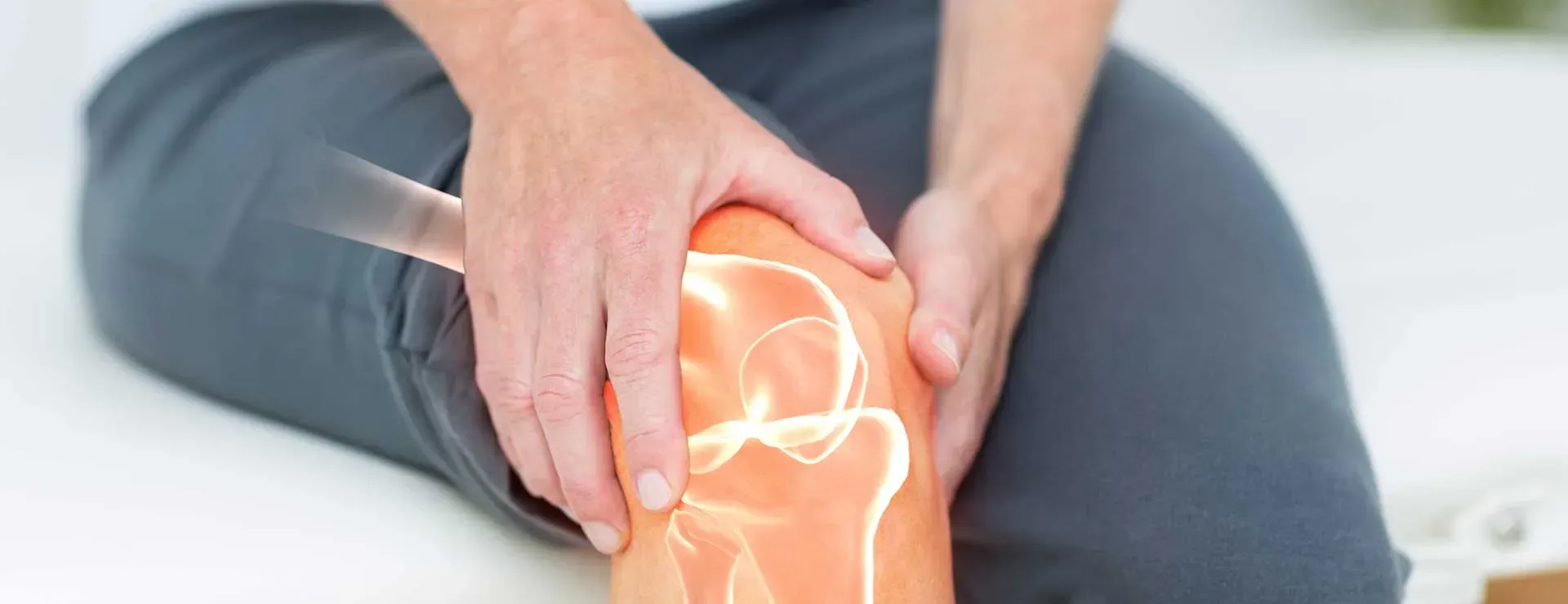

What is causing your knee pain?
Knee pain almost always has a structural explanation, and identifying it early determines how quickly you recover. The knee sits between two long lever arms (the femur and tibia), making it vulnerable to forces generated above and below. At Costa Health, clinical assessment examines not just the knee itself but the hip, ankle, and foot mechanics that influence how load passes through the joint.
The knee is a hinge joint with limited rotational capacity. When it’s forced to rotate under load, or when the muscles controlling it are imbalanced, structures fail. Which structure fails depends on the mechanism: a sudden twist damages ligaments or menisci, while gradual overload irritates tendons and the patellofemoral joint.
What is runner’s knee, and does it only affect runners?
Patellofemoral pain syndrome, commonly called runner’s knee, is the most frequent cause of anterior knee pain in active adults. The patella tracks within a groove on the femur, and when tracking goes off centre, the cartilage on the undersurface of the kneecap becomes irritated. Pain typically worsens with stairs, squatting, and prolonged sitting.
Despite the name, runner’s knee affects far more than runners. Padel players on the Costa del Sol are particularly susceptible. The sport involves constant low-stance movements, rapid lateral changes of direction, and lunging, all of which load the patellofemoral joint heavily. A 2019 study in the British Journal of Sports Medicine found that patellofemoral pain accounts for approximately 25% of all knee injuries seen in sports medicine clinics.
A common misconception is that patellofemoral pain means the knee is “wearing out.” It doesn’t. In most cases, the problem is a muscle control issue rather than a structural one. Weakness in the vastus medialis oblique (VMO) or the gluteal muscles allows the patella to track laterally, creating irritation that resolves once the underlying imbalance is corrected through targeted rehabilitation.
How can you tell if it’s a meniscus tear or a ligament injury?
The mechanism of injury often tells the story. Meniscus tears typically occur during a twisting motion on a loaded, slightly flexed knee, catching a foot on a padel court surface or turning quickly during football. The hallmark symptoms are joint line tenderness, intermittent swelling, and mechanical catching or locking. The knee may give way momentarily, but true instability isn’t usually present.
Ligament injuries feel different. An anterior cruciate ligament (ACL) injury usually involves a sudden pop, rapid swelling within hours, and a feeling that the knee can’t be trusted under load. Posterior cruciate ligament (PCL) injuries are rarer and typically follow a direct blow to the front of the shin, commonly seen in road traffic incidents or contact sports.
Clinical tests can differentiate between these injuries with reasonable accuracy. Daniele Delicati (MSc, BSc (Hons), MACP, MCSP, HCPC), Costa Health’s physiotherapist, uses specific assessment protocols including McMurray’s test for meniscal pathology and the Lachman test for ACL integrity. Not every knee injury needs an MRI. A skilled clinical examination often provides enough information to begin appropriate treatment without delay.
Why are knee injuries so prevalent in padel and racquet sports?
Padel combines the explosive lateral movements of tennis with the confined space of a walled court. Players decelerate suddenly against glass walls, lunge for low balls from a semi-crouched position, and pivot repeatedly on hard court surfaces. These mechanics place significant rotational and compressive forces through the knee.
The problem compounds when players have pre-existing weaknesses. Poor hip external rotation forces the knee to absorb rotational stress it isn’t designed for. Weak calf muscles reduce the ankle’s ability to absorb ground reaction forces, passing them upward to the knee. A 2021 review in the Journal of Sports Science and Medicine identified lower limb muscle imbalance as the primary modifiable risk factor for knee injuries in racquet sport athletes.
Running on the promenades and trails around Marbella, Mijas, and the Costa del Sol creates different knee demands. Downhill running increases patellofemoral compression forces by up to 50% compared to flat terrain. Trail runners who haven’t conditioned their quadriceps eccentrically are at particular risk of developing anterior knee pain.
What treatment does Costa Health offer for knee pain?
Knee rehabilitation at Costa Health is multidisciplinary because the knee rarely exists in isolation from the rest of the kinetic chain.
Physiotherapy forms the core of most knee treatment programmes. Progressive strengthening of the quadriceps, hamstrings, and gluteal muscles restores the muscular control that protects the joint. For runner’s knee, evidence consistently supports exercise-based rehabilitation over passive interventions. Proprioceptive and balance training is added for ligament injuries and post-surgical rehabilitation to retrain the neural pathways that govern knee stability.
Osteopathy addresses the broader mechanical picture, examining how hip mobility, pelvic alignment, and lumbar spine function affect loading at the knee. Restrictions in hip internal rotation, for instance, frequently contribute to knee pain that doesn’t respond to knee-focused treatment alone. Chiropractic care can be particularly effective when knee pain is associated with altered gait patterns or compensatory changes in the lumbar spine and pelvis.
Sports massage plays a valuable role in managing the muscular tension that accompanies knee problems. Tight iliotibial bands, restricted quadriceps, and overactive hamstrings all alter patellar tracking and joint loading. Releasing these structures creates a window of improved mobility that makes rehabilitation exercises more effective.
When should knee pain be assessed urgently?
A locked knee, where the joint physically cannot straighten, suggests a displaced meniscal fragment and requires prompt assessment. Rapid swelling within two hours of an injury is a strong indicator of ligament damage or fracture, as a haemarthrosis (blood in the joint) fills the knee far faster than inflammatory fluid would.
Any knee injury accompanied by an inability to bear weight, visible deformity, or a sensation of the joint giving way under normal walking loads should be assessed without delay. For children and adolescents, knee pain near the growth plates warrants particular caution, as fractures through growth plates can affect long-term development if missed.
For knee pain that has come on gradually, doesn’t involve locking or giving way, and worsens with specific activities, a clinical assessment at Costa Health will identify the cause and establish a clear treatment path. Most knee conditions respond well to structured rehabilitation when the underlying driver is correctly identified.