
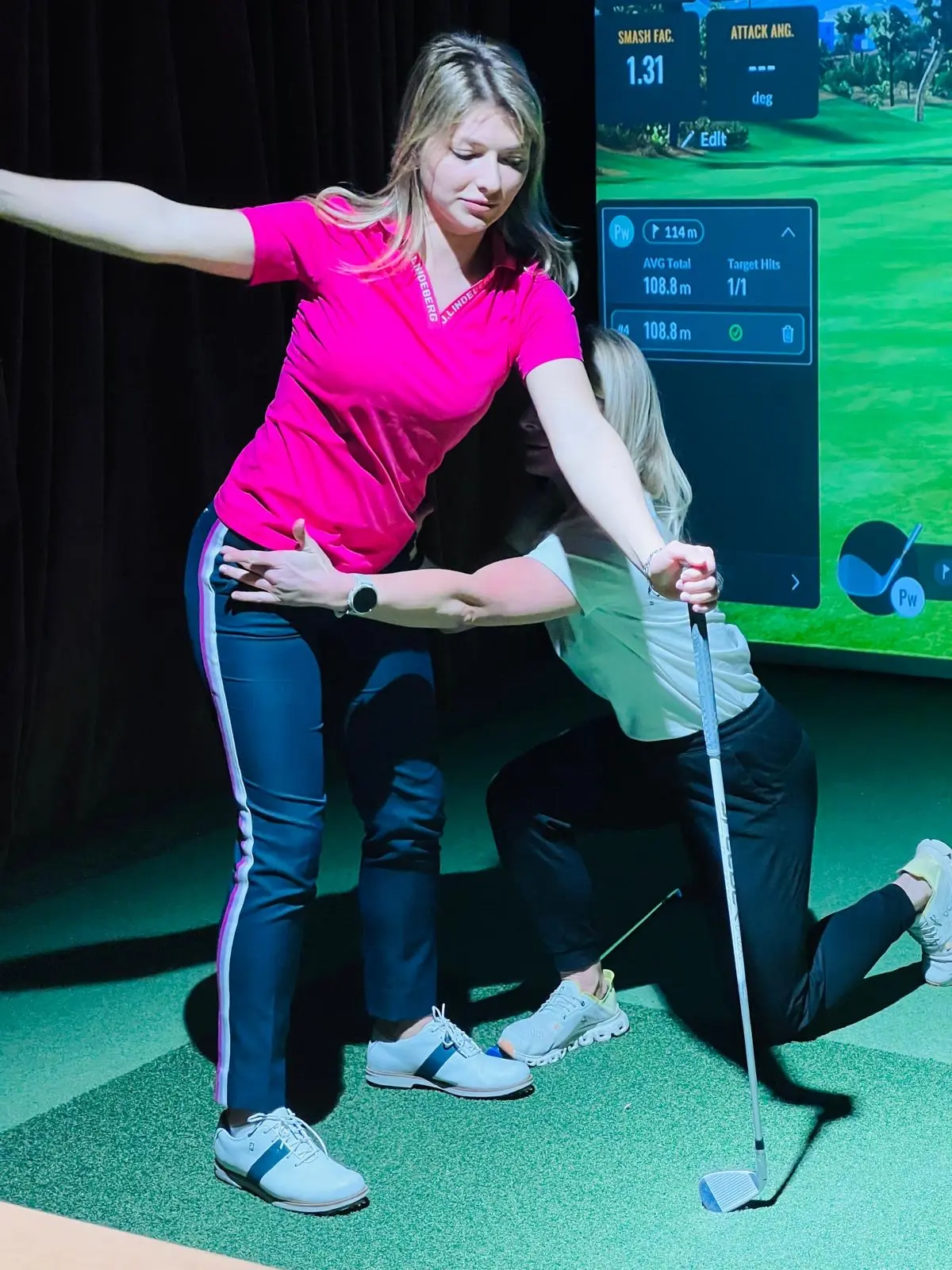
Costa Health and the Peter Gustafsson Academy have come together at Clubhouse Marbella to offer something genuinely different for golfers on the Costa del Sol: a fully integrated approach that combines expert swing coaching with detailed physical assessment, all under one roof.
Where coaching and physical therapy meet.
At the elite level of golf, it is common for coaching and physical therapy to work closely together, with both disciplines informing performance in a coordinated way. However, for the everyday golfer, this level of integration is far less accessible, and coaching and treatment often still happen in isolation.
At Clubhouse Marbella, we are effectively bringing that professional level model into a more accessible setting. This collaboration allows us to combine technical coaching with physical assessment in real time, creating a more complete understanding of each player’s swing.
Rather than viewing swing faults as purely technical or purely physical, we look at how the two interact. The coach identifies the movement patterns and swing characteristics, while we assess the body’s capacity to achieve those positions. This allows us to determine whether a limitation is driven by technique, physical restriction, or a combination of both.
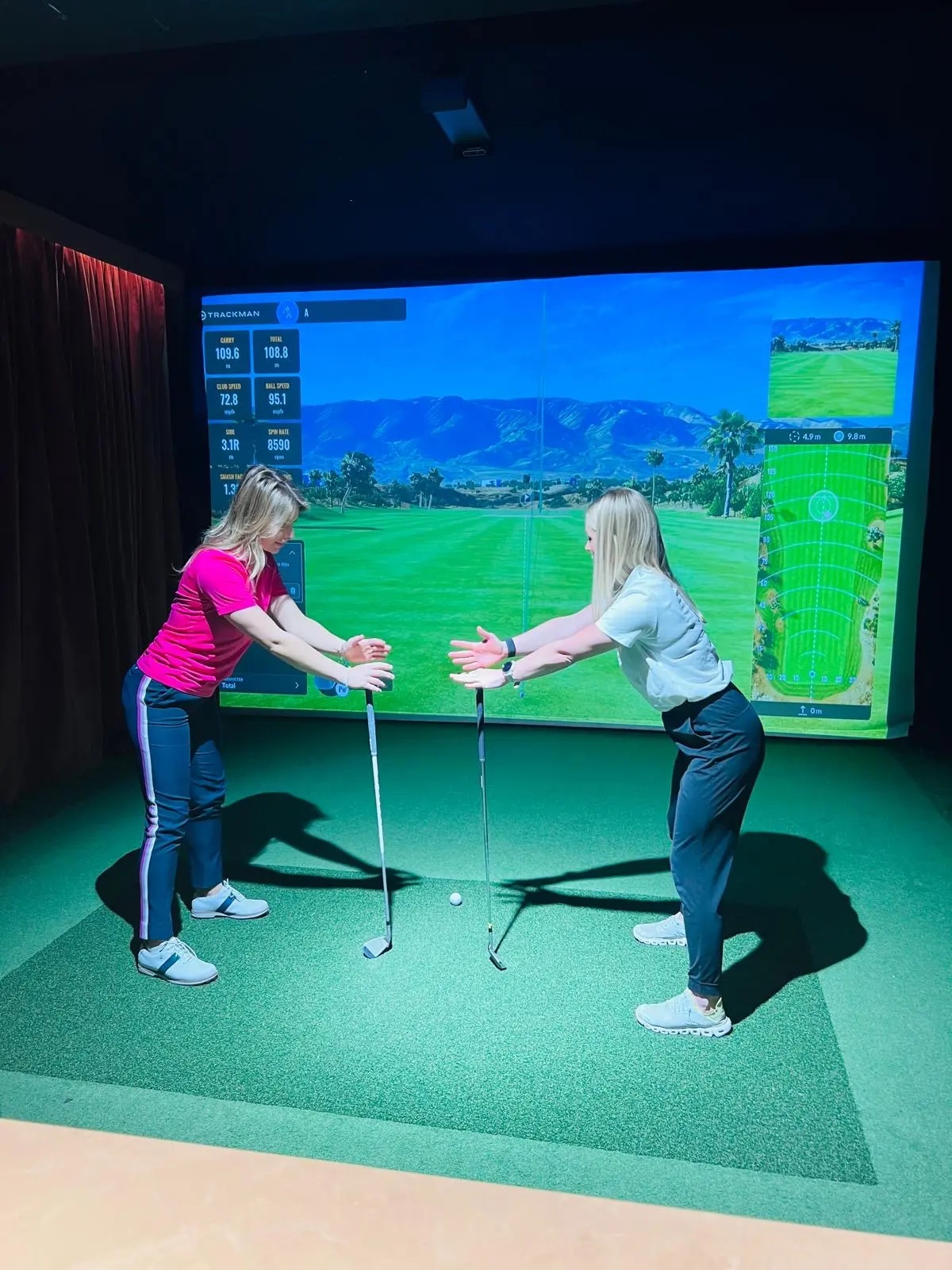
By working together in the same environment, we can implement changes more effectively, ensuring that technical adjustments are supported by the physical ability to perform them. This approach mirrors what is often seen in professional golf, but is now available to the everyday player looking to improve performance and reduce injury risk.
By working side by side at Clubhouse Marbella, the coach and therapist share observations, discuss findings, and develop solutions together creating a genuinely connected environment rather than two isolated assessments. The result is a clearer, more complete picture of what is affecting your performance and what can be done about it.
Understanding How Your Body Affects Your Swing
At the heart of this approach is a detailed movement assessment designed to identify physical restrictions that may be influencing your golf swing. Using a system developed by Sarah Monaghan the process incorporates AI-driven posture analysis alongside range of motion testing to highlight limitations within the body.
This builds a clear picture of how physical constraints may be contributing to specific swing characteristics whether that is a tendency to early extend, lose posture, or struggle with rotation through the ball.
For golfers who have been working on a fault without progress, understanding the physical side of the equation can be a turning point. Our guide to C and S-shaped postures in golfers explores how common postural patterns directly affect swing mechanics.
Combining Physical Findings with TrackMan Data
Once the physical assessment is complete, those findings are integrated directly with swing analysis using TrackMan data within the golf bay. By combining objective performance data with physical assessment results, we can identify not only what is happening in the swing, but why it is happening.
This creates a far more targeted pathway for improvement. Rather than applying generic technical fixes, each recommendation is informed by what your body can actually achieve – and what it currently cannot.
Quick Tip: If you have been told to “rotate more” but struggle to do so consistently, restricted hip or thoracic mobility may be a contributing factor. A physical assessment can help identify whether the limitation is structural, and what can be done to address it.
Collaborative, Real-Time Adjustments
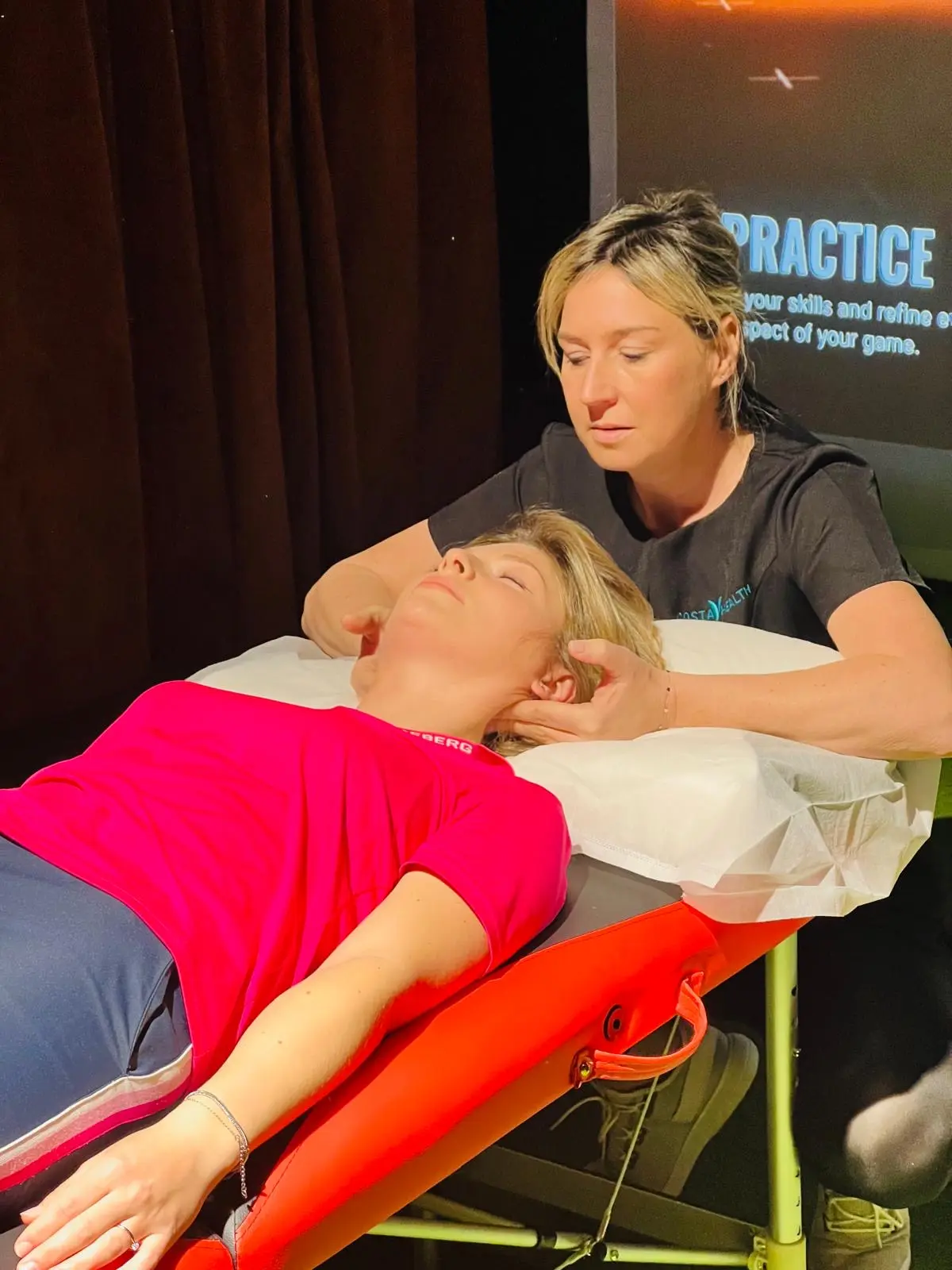
Perhaps the most distinctive aspect of this model is the ability to implement changes collaboratively and immediately. Working alongside the golf coach, we can translate physical findings into technical adjustments, supported by tailored drills and, where appropriate, on-site treatment.
This means any changes are both physically achievable and sustainable -not simply technical corrections that fail to address the underlying cause. Our golf injury treatment and movement analysis service forms the physical foundation of this work, while our team bring the expertise in musculoskeletal assessment and rehabilitation to every session.
Launch Event at Clubhouse Marbella
This collaboration will be launching officially very soon. There will be an upcoming event at Clubhouse Marbella where you can visit, meet the team, and see first hand how this approach works in practice. Further details will be shared shortly.
In the meantime, you can find out more about Costa Health at Clubhouse Marbella and what we offer on site.
Quick Tip: Before attending the launch event, it is worth noting two or three swing characteristics you would like to understand better whether they feel physical or technical. This helps the team direct your assessment more efficiently from the outset.
Frequently Asked Questions: Linking the Body and the Golf Swing
Why am I overextending in my swing?
Overextension can be influenced by both technique and physical capacity. From a coaching perspective, it may relate to sequencing or swing intent, but it is often compounded by limited hip or thoracic mobility, leading the body to extend through the lower back to generate movement.
Why do I slice the ball?
A slice is typically linked to an out-to-in swing path and clubface control. However, restrictions in shoulder rotation or thoracic mobility can make it difficult to deliver the club on a neutral path, meaning both technical and physical factors need to be considered together.
Is my swing fault technical or physical?
In most cases, it is a combination of both. The coach identifies the swing fault, while our therapist assesses whether your body has the capacity to achieve the desired movement. The key is understanding how these two elements interact.
Why do I struggle to rotate through the ball?
This may be a technical issue in sequencing, but it is often influenced by reduced mobility in the hips or thoracic spine. If rotation is limited physically, the swing will adapt accordingly – and no amount of technical coaching will fully resolve it until the physical restriction is addressed.
Why do I early extend during my downswing?
Early extension can be a learned movement pattern, but it is frequently associated with limited hip mobility or control. When rotation is restricted, the body creates space by moving towards the ball rather than rotating around the axis.
Why do I lose posture during my swing?
Loss of posture can stem from technical inefficiencies, but also from reduced strength and control through the core and hips. Without adequate stability, maintaining posture throughout the swing becomes very difficult.
Why is my ball striking inconsistent?
Inconsistency often reflects a mix of technical variability and physical compensation. If the body is working around restrictions, it becomes harder to repeat the same movement pattern reliably from one shot to the next.
Can improving my body help my swing without changing technique?
Improving mobility and control can make it easier to achieve better positions naturally, but it works best alongside coaching. Physical improvements support technical changes rather than replace them.
How do you assess both the swing and the body together?
We work collaboratively. The coach identifies the swing characteristics, and our therapist assesses your movement, range of motion, and control. Using tools such as TrackMan alongside physical screening allows us to connect what we see in the swing with what the body can do.
Why is it important to work with both a coach and a therapist?
Because technique and physical capacity are closely linked. By working together, we can identify the swing faults you present with and understand whether they are influenced by your movement capabilities – ensuring that any changes are both technically sound and physically achievable.