
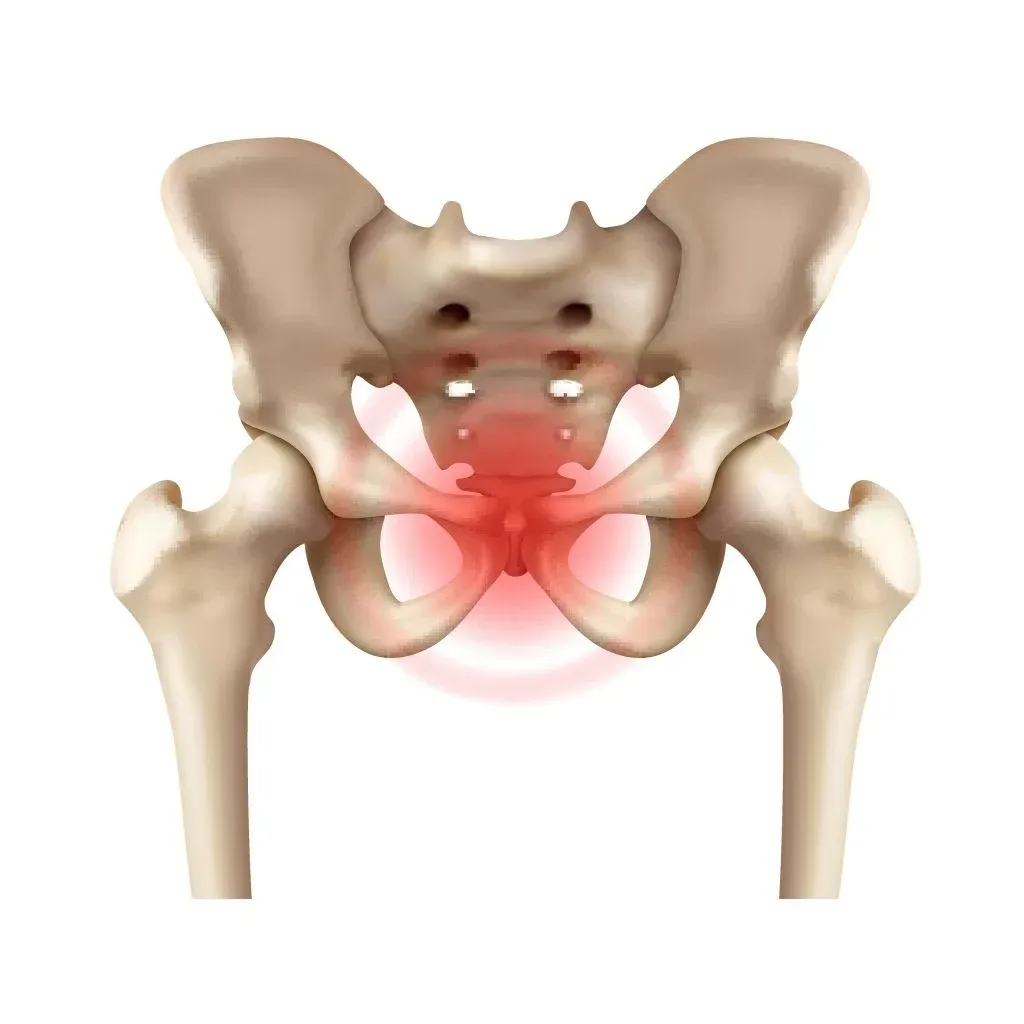

Symphysis pubis dysfunction is pain and instability at the pubic symphysis, the cartilaginous joint at the very front of the pelvis where the two halves of the pelvic ring meet. It produces sharp, localised pain over the pubic bone that worsens with walking, climbing stairs, rolling in bed, and separating the legs. SPD is most common during pregnancy but can also occur after childbirth, following pelvic trauma, or in athletes with chronic groin loading.
How common is SPD, and why does pregnancy trigger it?
SPD sits within the broader category of pelvic girdle pain, but it specifically targets the anterior joint. Prevalence figures vary, but a systematic review in Acta Obstetricia et Gynecologica Scandinavica (2005) reported that symphyseal pain affects approximately 30% of pregnant women to some degree, though only a fraction experience the severe, disabling form.
The mechanism is straightforward. During pregnancy, circulating relaxin softens the ligaments that hold the pubic symphysis together, allowing up to 10mm of physiological widening. In most women this happens gradually and causes no trouble. But when the joint widens unevenly, or when the supporting muscles can’t stabilise the increased movement, pain follows. Asymmetric sacroiliac joint function on one side often drives uneven forces through the symphysis, which is why posterior and anterior pelvic pain so often appear together.
A firm clinical position: SPD is not an inevitable consequence of pregnancy. It’s a biomechanical dysfunction that responds to treatment. Women told to simply “put up with it until delivery” are being given outdated advice. Early intervention produces significantly better outcomes.
What does SPD actually feel like?
The pain is usually sharp and well-localised to the pubic bone. Pressing on the symphysis reproduces it. Walking produces a characteristic waddling gait because the pelvis can’t transfer load cleanly from one leg to the other.
Specific provocative movements are telling. Getting out of the car with one leg at a time is often agonising. Turning over in bed at night catches people off guard. Standing on one leg, even briefly to pull on trousers, can produce a stabbing sensation. The pain sometimes radiates into the inner thighs or groin, but it doesn’t travel below the knee.
One edge case worth knowing: diastasis of the symphysis pubis. This is different from SPD. It refers to an actual separation of the joint surfaces beyond the normal range, sometimes occurring during or after delivery. A gap greater than 10mm on imaging is considered pathological and may need specialist orthopaedic input. It’s rare, but it’s important to distinguish it from standard SPD because management differs.
How does Costa Health treat SPD?
Treatment starts with a thorough pelvic assessment. Sarah Monaghan, chiropractor and owner of Costa Health, has over 20 years of experience working with pregnancy-related pelvic conditions. The first step is always identifying which joints are contributing, because treating the symphysis in isolation while ignoring a dysfunctional sacroiliac joint on the other side rarely produces lasting results.
Chiropractic care addresses the posterior pelvic mechanics. Restoring balanced sacroiliac joint movement reduces the asymmetric forces feeding through to the pubic symphysis. Techniques are adapted for pregnancy: side-lying adjustments, drop-piece methods, and low-force activator work are all used depending on the patient’s stage and comfort.
Osteopathic approaches work well for the soft tissue component. Releasing the adductor muscles, which attach directly to the pubic bone, reduces the muscular pull across the symphysis. Osteopathic cranial and visceral techniques can also address the broader fascial tensions that contribute to pelvic instability.
Physiotherapy is critical for building stability around the joint. Targeted pelvic floor activation, transversus abdominis co-contraction, and gluteal strengthening give the pelvis the muscular scaffolding it needs when the ligaments are lax. A 2004 study in the British Medical Journal showed that specific stabilising exercises reduced pain and improved function in pregnant women with pelvic girdle pain significantly more than standard antenatal care alone.
Sports massage addresses the secondary muscle tightness that accumulates around an unstable pelvis. The hip flexors, piriformis, and quadratus lumborum often become hypertonic in response to pelvic instability, and releasing them reduces compressive load on the joint.
What practical steps help manage SPD day to day?
Small changes in movement patterns make a measurable difference. Keeping the knees together when rolling in bed or getting out of a car prevents the shearing force that provokes symphyseal pain. A pelvic support belt, worn low across the greater trochanters rather than at the waist, provides external stability during weight-bearing activities.
Ice applied directly over the pubic bone for 10 to 15 minutes can reduce local inflammation after a flare-up. Avoiding prolonged standing and breaking up walking into shorter bouts prevents cumulative loading.
The “push through it” mentality backfires with SPD. Pain that’s ignored tends to escalate, and the longer the joint remains irritated, the harder it becomes to settle.
When is SPD a red flag?
SPD itself doesn’t indicate anything sinister, but certain presentations warrant urgent attention. Sudden onset of severe pubic pain during or immediately after delivery could signal a symphyseal rupture or separation, particularly after a difficult vaginal birth. Inability to weight-bear at all, combined with significant visible swelling over the pubic area, needs immediate medical assessment and imaging.
During pregnancy, any acute pelvic pain accompanied by vaginal bleeding or signs of systemic illness should be assessed by a midwife or obstetrician before proceeding with musculoskeletal treatment.
For the vast majority, SPD is a mechanical problem with mechanical solutions. If you’re on the Costa del Sol and struggling with pubic symphysis pain during or after pregnancy, book an appointment at Costa Health. The clinical team specialises in getting women moving comfortably again, and the earlier treatment starts, the faster the results.