
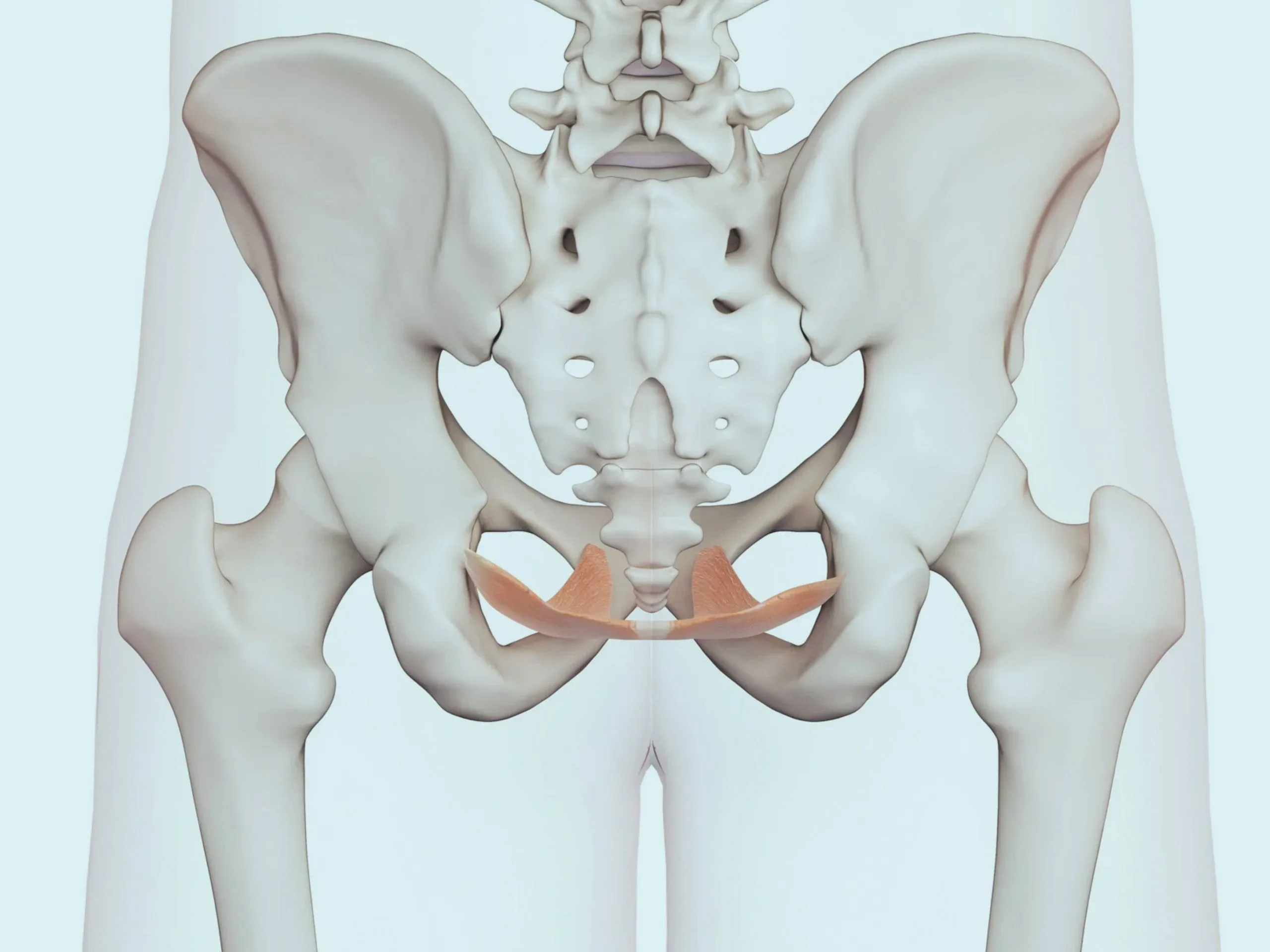

Pelvic girdle pain is musculoskeletal pain arising from the sacroiliac joints, the pubic symphysis, or both. It produces a deep ache across the back of the pelvis, the groin, or the inner thighs, and it’s most commonly experienced during pregnancy and the postpartum period. PGP is distinct from low back pain, though the two often coexist and get lumped together.
How common is PGP, and who does it affect?
Pregnancy-related PGP is far more common than most people realise. A large European study published in Spine (2004) found that roughly 20% of pregnant women experience significant pelvic girdle pain, making it one of the most prevalent musculoskeletal conditions of pregnancy. Despite that, it remains under-recognised. Many women are told it’s just a normal part of pregnancy and offered no treatment, which is neither accurate nor acceptable.
PGP doesn’t only affect pregnant women, though that’s the most frequent context. It can occur after pelvic trauma, in hypermobile individuals, and occasionally in male athletes with groin injuries. The common denominator is altered load transfer through the pelvic ring.
What actually causes it?
The pelvis is a ring of bone held together by some of the strongest ligaments in the body. During pregnancy, the hormone relaxin increases ligament laxity to allow the pelvis to expand for delivery. In some women, that increased laxity destabilises the pelvic joints earlier than expected, particularly if the stabilising muscles, gluteals, pelvic floor, and deep abdominals, aren’t strong enough to compensate.
A specific clinical example helps illustrate. Sarah Monaghan, chiropractor at Costa Health with over 20 years of clinical experience, frequently treats expat women in their second or third trimester who’ve been active all their lives but suddenly can’t roll over in bed without sharp pubic pain. The ligaments have loosened, the muscular system hasn’t adapted, and the sacroiliac joint on one side has become hypermobile relative to the other. The resulting asymmetry is what drives most of the pain.
One misconception worth correcting: PGP isn’t caused by the baby “sitting on a nerve.” It’s a biomechanical problem related to joint stability and motor control, not nerve compression. Framing it correctly matters because it points towards effective treatment rather than passive waiting.
How is PGP different from SPD?
Symphysis pubis dysfunction (SPD) is a specific subset of PGP that affects the joint at the front of the pelvis. All SPD is PGP, but not all PGP is SPD. The distinction matters because posterior pelvic pain (sacroiliac) and anterior pelvic pain (symphysis) respond to different management strategies. A thorough clinical assessment identifies which joints are involved so treatment can be targeted accurately.
What does treatment look like?
The Royal College of Obstetricians and Gynaecologists (RCOG) recommends manual therapy and exercise as first-line management for pregnancy-related PGP. Costa Health’s multidisciplinary team puts that recommendation into practice.
Chiropractic pelvic adjustments restore symmetry to the sacroiliac joints. Techniques are modified for pregnancy, typically using side-lying positions and lower-force methods. The goal is to restore normal joint mechanics so the pelvis can transfer load evenly again.
Osteopathic treatment focuses on the soft tissues and fascial connections around the pelvis, addressing restrictions in the hips, lumbar spine, and thorax that alter how forces travel through the pelvic ring. Visceral techniques can also help when intra-abdominal pressure is contributing to symptoms.
Physiotherapy is essential for the rehabilitation component. Targeted activation of the pelvic floor, transversus abdominis, and gluteus medius teaches the muscular system to compensate for the ligamentous laxity. A 2005 randomised controlled trial in the British Medical Journal demonstrated that a specific stabilising exercise programme significantly reduced pain and disability in pregnant women with PGP compared to standard care.
Sports massage releases the tight adductors, hip flexors, and piriformis muscles that almost always accompany PGP. This is particularly valuable when pain has been present for weeks and protective guarding has built up around the pelvis.
What can you do at home?
Practical modifications make a real difference. Keeping your knees together when rolling in bed, getting in and out of the car, and sitting down reduces shearing forces across the pelvis. A pelvic support belt worn low around the hips can provide temporary stability during activities. Sleeping with a pillow between your knees offloads the sacroiliac joints overnight.
Avoid pushing through pain. PGP responds poorly to the “just keep going” approach. Activities that provoke symptoms, long walks, single-leg standing, heavy lifting, need modifying rather than enduring.
When should PGP prompt urgent assessment?
PGP itself isn’t dangerous, but sudden severe pelvic pain during pregnancy can indicate other conditions that need ruling out. Placental abruption, ectopic pregnancy (in early pregnancy), and pubic symphysis rupture are rare but serious. If pelvic pain is accompanied by vaginal bleeding, fever, or an inability to weight-bear at all, seek immediate medical assessment.
For the majority of women, PGP is a treatable mechanical problem. The sooner it’s assessed and managed, the less it disrupts daily life. If you’re on the Costa del Sol and dealing with pregnancy-related pain, book an appointment at Costa Health. Sarah Monaghan has two decades of experience helping women move comfortably through pregnancy and beyond.