
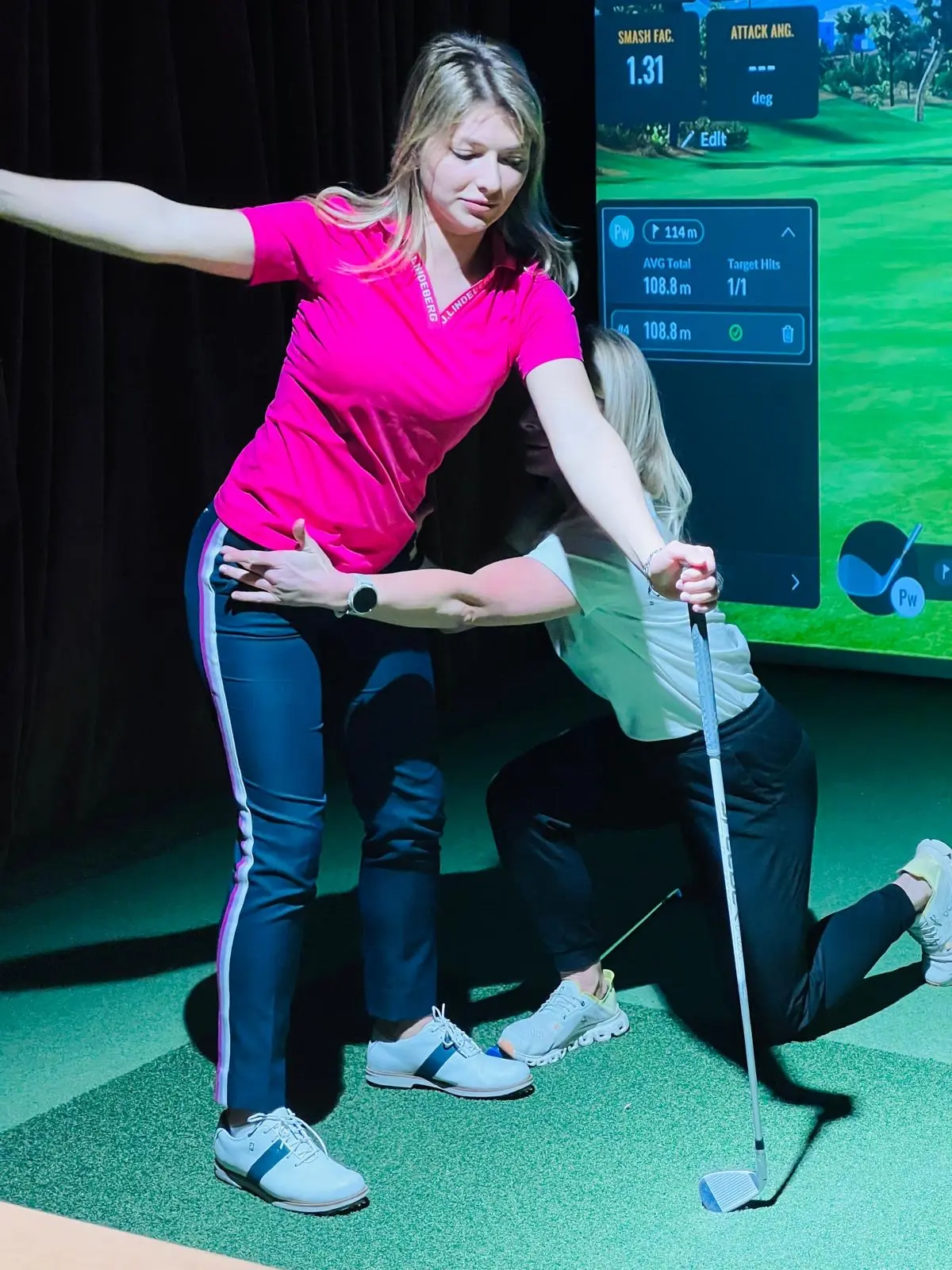
Can your body actually do what your golf coach is asking? Most golfers spend time and money on coaching, but if your body can’t physically achieve the positions your swing demands, technical coaching alone may not be enough to fix the problem. That’s the idea behind Costa Health’s free golf performance event at Clubhouse Marbella, where swing coaching, body assessment, and targeted treatment come together in our event.
Key Takeaways
- Golf swing faults like early extension and loss of posture can be linked to physical restrictions, not just poor technique.
- Costa Health’s free event at Clubhouse Marbella lets you experience swing analysis, body screening, movement training, and treatment in one morning.
- Combining coaching feedback with a body assessment gives you something most golfers never get: a clear picture of what your swing is doing and why your body might be preventing you from fixing it.
Why We Are Running This Event
At Costa Health, we work with golfers every week who’ve been told the same thing by their coach: “You’re extending too early” or “You’re losing your posture through impact.” They know what the fault is. They just can’t seem to fix it.
In many cases, the reason isn’t a lack of practice. It’s a physical limitation. If your hips don’t have enough internal rotation, your body will find another way to get through the ball. That compensation often looks like early extension, where the hips push towards the ball instead of rotating around the spine. Coaching cues and drills can help, but they’re often less effective when the underlying restriction is still there.
This event is designed to show golfers how coaching and clinical body assessment work best when they happen side by side. A golf coach identifies what your swing is doing. Our physiotherapy and chiropractic team identifies why your body might not be letting you change it.
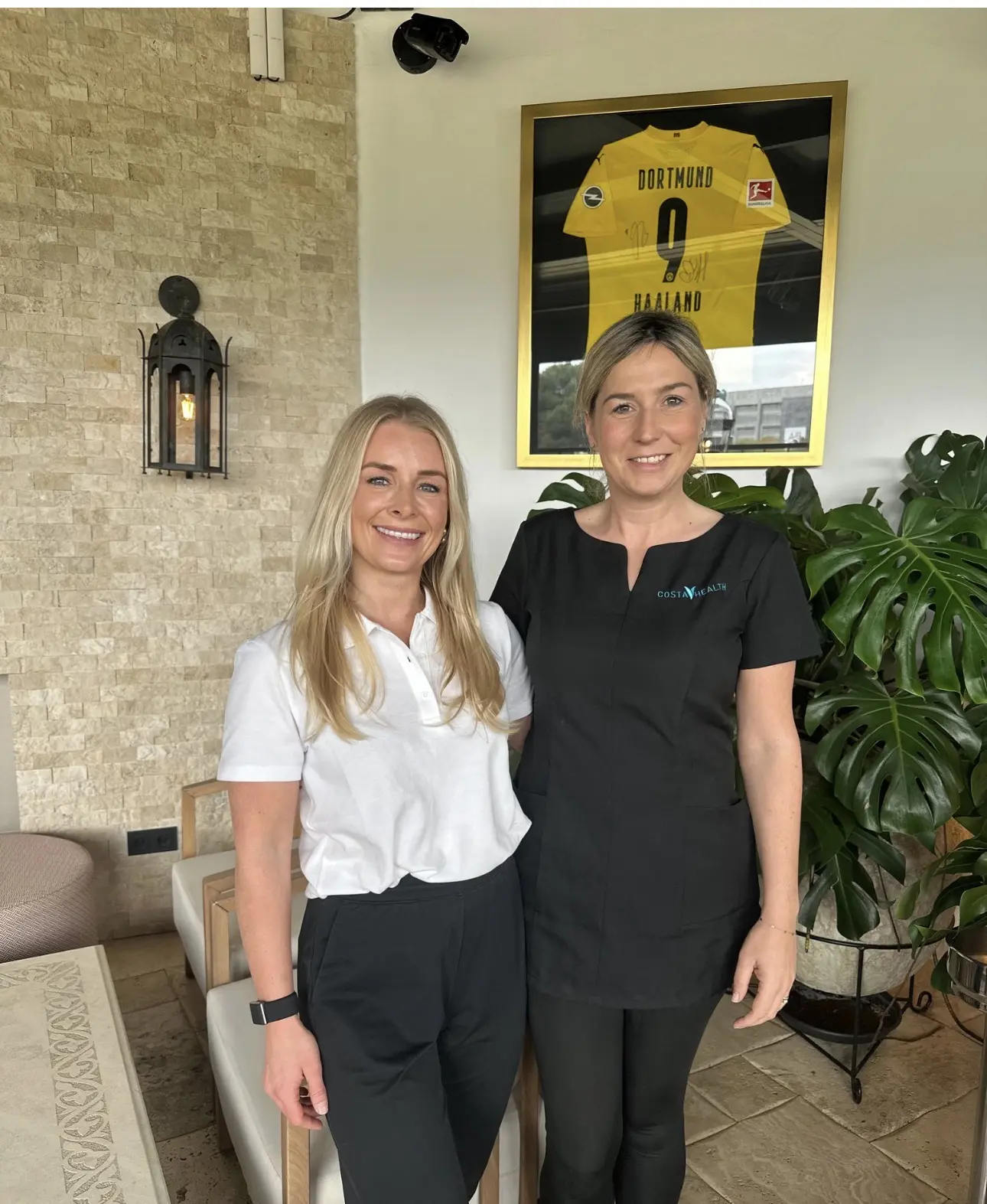
“Most amateur golfers I see are not lacking strength, they are lacking thoracic rotation. When the mid back cannot rotate efficiently, the lower back and shoulders compensate, which is where both performance loss and pain begin. The encouraging part is that with targeted treatment and specific mobility work, you can often see meaningful improvements in movement and comfort within just a few sessions.”
Sarah Monaghan , Chiropractor at Costa Health
What to Expect on the Day
The event runs from 11:00 to 13:00 at Clubhouse Marbella, and it’s completely free. We’ve set up four bays, each focused on a different part of the coaching and body performance picture. You can move between them or sign up for short 15-minute slots depending on what interests you most.
Swing Analysis with the Golf Coach
Your first stop is all about your swing. Alexandra from PG Academy will give you quick, focused feedback on your technique, looking specifically at common faults like early extension, loss of posture, and sequencing issues. This isn’t a full lesson. It’s a snapshot of what’s happening in your swing, with a few practical tips you can take away immediately.
What matters here is that the coach identifies the fault. That’s the starting point. What most golfers don’t realise is that identifying the fault is only half the picture.
Body Assessment: Finding Out Why
Next, our team will carry out a short focused posture and spinal screening, assessing your hip mobility, thoracic rotation, and general movement patterns. We’re looking for whether physical restrictions in your body could be contributing to the swing faults the coach has just identified.
This is something we see constantly in clinic. A golfer with limited thoracic rotation may struggle to generate the power and distance they’re looking for, regardless of how many hours they spend on the range. Someone with restricted hip internal rotation may well develop early extension as a compensation pattern. Your body finds a way to complete the movement, but it’s rarely the efficient way.
Quick Tip: If you’ve been working on the same swing fault for months without improvement, it’s worth checking whether your body can physically achieve the position your coach is asking for. A simple hip rotation and thoracic mobility screen takes minutes and can save you a lot of frustration on the range.
Strength, Power, and Stability Drills
Bay three focuses on movement training. Golf isn’t just technique. It requires your body to produce and control force in a very specific sequence.
One of the most important physical skills in the golf swing is the ability to separate the pelvis from the thorax. This is sometimes called thoracic-pelvic dissociation, and it’s the mechanism behind what coaches refer to as the “X-factor.” That difference in rotation between your upper and lower body is what stores and releases energy through the swing.
At this bay, we’ll demonstrate simple movement drills designed to improve thoracic rotation, pelvic rotation, and the ability for the upper and lower body to work independently. If your body can’t produce or control this separation, you’ll often compensate through loss of posture or inefficient swing mechanics that cost you both distance and consistency.
Targeted Treatment: A 15-Minute Taster
Finally, we brings it all together. Based on what we find during the screening, you’ll receive a short 15-minute taster treatment targeted at whatever we’ve identified as the main physical restriction affecting your swing.
For example, if you demonstrate early extension and we identify limited internal rotation in your hip, we can show you some targeted release and mobility work to help improve that specific movement. It’s a practical demonstration of how treatment and movement work can complement the changes your coach is asking you to make.
The Connection Most Golfers Miss
TPI (Titleist Performance Institute) has developed a widely-used screening model that maps 16 functional movement tests to specific swing characteristics, creating what they call the “body-swing connection.” Their clinical framework suggests that physical limitations are a common contributing factor in swing faults among amateur golfers.
In clinical practice, we often see patterns: a golfer with restricted hip rotation may be more likely to develop early extension, while poor thoracic mobility can contribute to loss of posture or an over-the-top swing path. These are recognised biomechanical compensation patterns, though each golfer’s body responds differently.
The problem is that most golfers address coaching and body conditioning in complete isolation. You see your coach on Tuesday and maybe do some stretching at home on Thursday, but nobody connects the dots between the specific swing fault you’re trying to fix and the specific physical restriction that’s driving it.
That’s exactly what this event is designed to demonstrate. When a coach, a therapists, and a movement specialist work in the same space, looking at the same golfer, the feedback becomes far more useful than any of those consultations in isolation.
Quick Tip: Ask your golf coach which swing fault they’d most like you to fix. Then ask a physiotherapist whether your body can physically do what that correction requires. You might be surprised by the answer.
Who Is This Event For?
Honestly, any golfer who plays regularly on the Costa del Sol. You don’t need to be injured or in pain to benefit from a body assessment. Many of the restrictions we identify are things golfers have lived with for years without realising they’re affecting their game.
That said, if you’ve been struggling with the same swing fault despite regular coaching, or if you’ve noticed a gradual loss of distance or consistency, this is particularly relevant. It’s also useful if you’re returning to golf after an injury and want to understand what your body can and can’t do right now.
The event is free and informal. There’s no hard sell, no obligation to book anything afterwards. It’s simply a chance to experience what an integrated approach to golf performance looks like when coaching, assessment, and treatment work together.
Frequently Asked Questions
Can physical limitations really affect my golf swing?
Yes. The TPI screening model links physical restrictions like limited hip rotation or poor thoracic mobility to swing faults such as early extension and loss of posture. Many clinicians working with golfers see these patterns regularly in practice.
What causes early extension in the golf swing?
Limited hip internal rotation is one of the most commonly observed contributing factors. When the hips can’t rotate properly, the body may compensate by pushing forward towards the ball instead of turning through the shot.
What is a TPI golf assessment?
A TPI (Titleist Performance Institute) assessment is a series of 16 functional movement tests that identify physical limitations affecting your golf swing. It maps your body’s capabilities to specific swing faults. Costa Health offers full TPI assessments at our clinic.
Do I need to be injured to attend the event?
Not at all. Most golfers who benefit from body assessment aren’t in pain. They simply have movement restrictions they’ve never identified that are limiting their performance and enjoyment of the game.
How does hip mobility affect golf performance?
Hip mobility plays an important role in rotation through the golf swing. Limited hip rotation can contribute to compensations that affect power, distance, and consistency, and may also place additional load on the lower back over time.
Important: This article is for general information only and does not replace professional medical advice. If you’re experiencing symptoms, book a consultation with one of our team so we can assess your individual situation.
How Costa Health Can Help
If you’re interested in understanding how your body affects your golf game, our team can help:
- TPI Golf Assessments: a full 16-point movement screen mapped to your specific swing faults
- Golf Clinic at Clubhouse Marbella: ongoing partnership with the Peter Gustafsson Academy combining coaching, physiotherapy, and AI movement analysis
- Chiropractic : targeted treatment for the physical restrictions affecting your swing
Not sure where to start? Get in touch and we’ll point you in the right direction.