
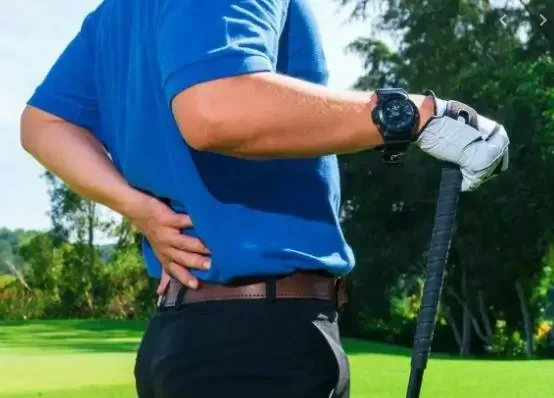
This case study details the assessment and rehabilitation of a 62-year-old golfer presenting with chronic lower back pain that had been affecting his game for over eight months. It illustrates how a structured, movement-focused approach can resolve persistent golf-related back pain without the need for imaging or ongoing medication.
Patient Background
The patient was an active male golfer playing three to four rounds per week across courses. His playing frequency had recently increased during a period when friends were visiting.
His primary complaint was right-sided lower lumbar pain that worsened after 12 to 14 holes and peaked the following morning. He reported noticeable stiffness during his backswing and a reduction in driving distance.
He had previously tried rest, massage and anti-inflammatory medication, each providing only temporary relief.
Full assessment of Range of Motion and Golf Movement Testing
At Costa Health, we carry out a comprehensive analysis of body movement. This includes a detailed assessment of postural alignment, a full evaluation of range of motion across the entire body, and a structured 16 point golf specific screening using TPI testing. This approach allows us to identify movement limitations, asymmetries, and performance barriers with precision.
In this golfer we found the following:
- Reduced lead hip internal rotation
- Marked thoracic rotation restriction
- Poor glute activation during single-leg loading
- Lumbar segmental tenderness without neurological signs
There was no true sciatica and no indication of nerve root involvement. The clinical picture pointed to mechanical overload rather than disc pathology – a distinction that is important in guiding effective treatment.
Key Contributing Factors
Identifying the drivers behind the pain was central to building an effective plan. In this case, four factors stood out:
- Limited hip mobility forcing excessive lumbar rotation during the swing
- Fatigue-related swing compensation during longer rounds
- No structured warm-up before play
- High weekly playing volume without adequate recovery planning
This was not a structural failure. It was a load and movement problem and load and movement problems respond well to the right rehabilitation approach.
Quick Tip: If your back pain consistently worsens after 12 or more holes, fatigue-driven compensation is likely contributing. A structured warm-up and planned recovery days can make a significant difference before any formal treatment is needed.
Treatment Approach
The treatment plan was built around three priorities.
1. Restore Movement Quality
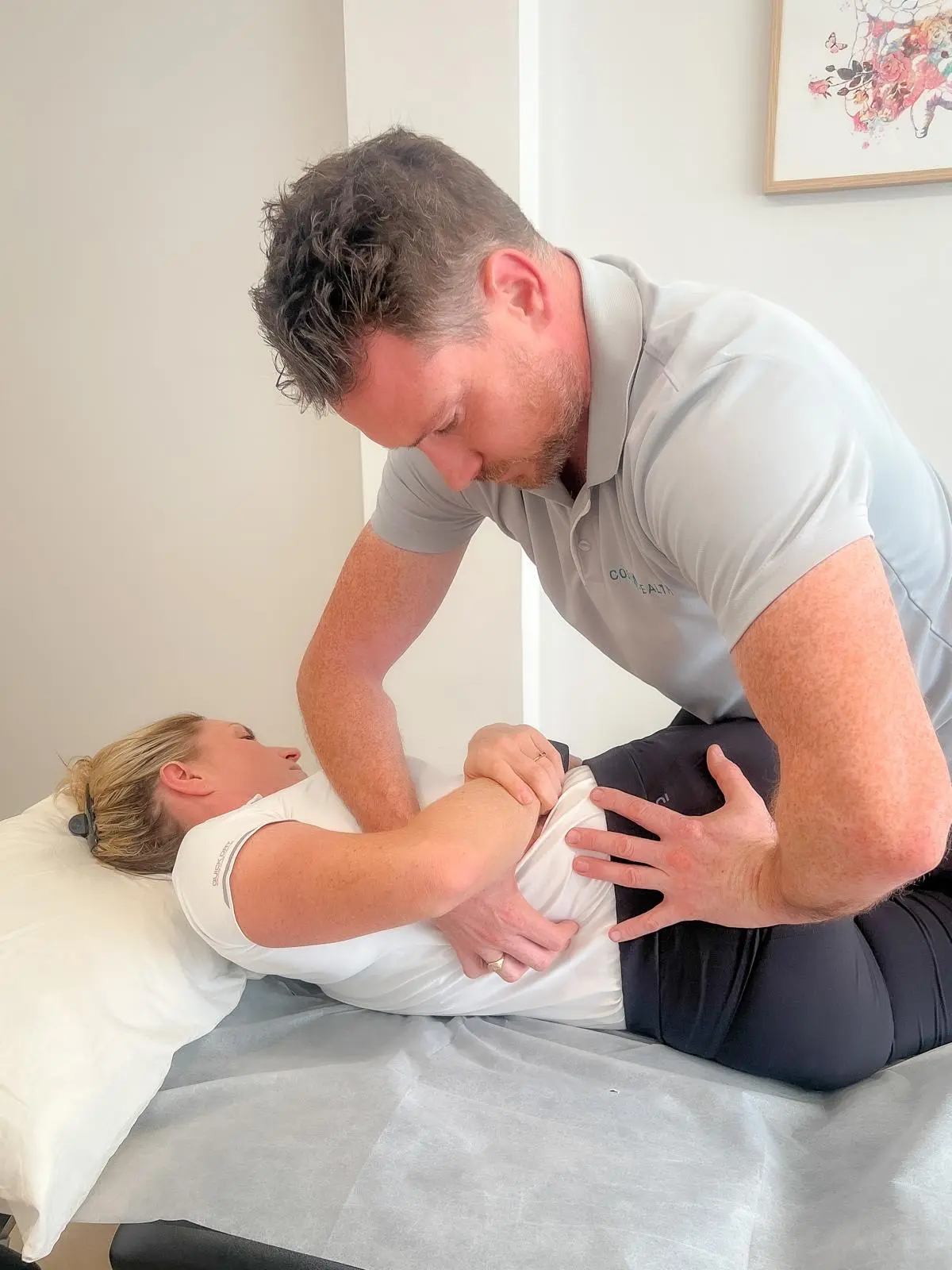
Manual therapy was used to improve thoracic extension and hip rotation, addressing the restrictions identified at assessment. Improving mobility at these joints reduces compensatory demand on the lumbar spine during the rotational phases of the golf swing.
2. Rebuild Control and Strength
A progressive physiotherapy programme targeted:
- Glute activation
- Anti-rotation core stability
- Controlled rotational strength
3. Improve Load Management
Playing frequency was reduced to twice weekly for three weeks while movement work continued between rounds. A structured ten-minute warm-up was introduced before every round.
For golfers managing lower back pain, modifying load temporarily rather than stopping play entirely, is often the most effective short-term strategy.
Outcome
Progress was measured at regular intervals throughout the eight-week plan.
- Week four: Pain during play had reduced by approximately 70 per cent.
- Week eight: Full playing frequency resumed with no post-round flare-ups. Driving distance improved slightly, which the patient attributed to feeling less restricted in his backswing.
Equally significant was the return of confidence. He no longer anticipated pain after playing a shift that itself contributes to better movement patterns and reduced muscular guarding.
Quick Tip: Monitoring your symptoms after play is a useful guide during rehabilitation. If soreness consistently settles within 24 hours and does not worsen week on week, your load is likely manageable. Speak to your physiotherapist if symptoms are not following this pattern.
Clinical Insight
Chronic golf-related back pain in the Marbella and Mijas area is frequently caused by cumulative mechanical stress rather than serious pathology. Many golfers assume that persisting pain means structural damage,in most cases, it does not.
When hip mobility and thoracic rotation are restored, lumbar compensation reduces significantly. The relationship between restricted hips and lower back loading is well established in golf biomechanics, and is a central focus of assessments at Costa Health.
For further reading on posture and golf performance, see our guide on addressing posture problems in golfers.
Your body is your greatest club. When movement quality improves, performance and resilience improve alongside it.
Frequently Asked Questions
What causes chronic lower back pain in golfers over 60?
In most active golfers, persistent back pain is caused by repeated mechanical overload rather than structural damage. Reduced hip mobility, thoracic stiffness and accumulated playing volume are common drivers. Age-related tissue changes may contribute, but they are rarely the sole cause.
Is it safe to keep playing golf with ongoing back pain?
If pain is mechanical, non-radiating and manageable, modified play combined with rehabilitation is often appropriate. However, worsening pain, leg symptoms or neurological signs should be assessed before continuing. A comprehensive golf assessment can help clarify what is safe for you.
How long does it take to resolve chronic golf back pain?
With structured rehabilitation and load modification, meaningful improvement is often seen within a relatively short amount of time. Long-standing cases that have been present for many months may require a more gradual progression.
Do I need an MRI for golf-related back pain?
Imaging is not routinely required for mechanical back pain without neurological signs. Clinical assessment and movement analysis are usually sufficient in the early stages. For more detail on when imaging is indicated, see our article on whether you need a scan for back or neck pain.
Why does my back hurt more the day after golf?
Mechanical irritation often produces delayed soreness. Fatigue during the round alters movement patterns, increasing stress on lumbar joints and soft tissues. Symptoms commonly peak 12 to 24 hours after play.
Can improving hip mobility really reduce back pain?
Yes. When hip internal rotation improves, rotational demand is distributed more evenly through the kinetic chain. This reduces compensatory stress on the lumbar spine during the golf swing.
When should someone in Marbella or Mijas seek professional assessment?
If back pain persists longer than three weeks, limits performance, recurs regularly or begins to affect daily activity, early assessment helps prevent chronic dysfunction and prolonged recovery. Our team can assess and guide your rehabilitation from the outset.