
Knee pain can significantly affect your ability to move, exercise, and carry out daily activities. One of the most common causes is a meniscus injury. Understanding what the meniscus does, how injuries occur, and the most effective treatment options can help you recover faster and prevent long-term problems.
This guide covers the most frequently asked questions about meniscus injuries and explains how Daniele, our expert physiotherapist, supports patients through every stage of recovery at our clinic in Riviera del Sol, Mijas.
What Is the Meniscus in the Knee?
The meniscus is a type of cartilage found within the knee joint. Each knee contains two menisci:
- Medial meniscus on the inner side
- Lateral meniscus on the outer side
These structures act as shock absorbers between the thigh bone (femur) and shin bone (tibia). They play a crucial role in:
- Distributing load across the knee
- Stabilising the joint
- Protecting cartilage surfaces
- Supporting smooth movement
Without a healthy meniscus, the knee becomes more vulnerable to pain, instability, and degeneration over time. If you are experiencing knee pain, understanding the underlying cause is an important first step.
What Causes a Meniscus Tear?
Meniscus tears can occur suddenly or develop gradually over time.
Traumatic tears
These are more common in younger, active individuals and typically result from:
- Twisting the knee while the foot is planted
- Sudden changes in direction during sport
- Deep squatting or kneeling under load
Degenerative tears
Older adults are more likely to develop degenerative meniscal injuries, where the cartilage weakens and tears with relatively minor force or repetitive stress over time.
What Are the Symptoms of a Meniscus Tear?
Symptoms vary depending on the severity and location of the tear. Common signs include:
- Pain along the inner or outer side of the knee
- Swelling that develops gradually over 24 to 48 hours
- Clicking, catching, or locking sensations in the joint
- Difficulty fully bending or straightening the knee
- A feeling of instability or weakness when weight-bearing
If your knee locks or gives way, seek professional assessment promptly. Early diagnosis can make a significant difference to your recovery options.
Quick Tip: In the first 48 hours after a knee injury, rest the joint, apply an ice pack wrapped in a cloth for 15-20 minutes at a time, use a compression bandage if available, and keep the leg elevated where possible. This helps manage swelling while you arrange an assessment.
Do You Need Surgery for a Meniscus Tear?
Not always. The answer depends on the type and severity of the tear, and many meniscus injuries can be managed effectively without surgical intervention, particularly when:
- The tear is small or stable
- Symptoms are manageable and not worsening
- There is no persistent locking of the knee
Surgery may be considered if symptoms fail to improve with conservative treatment, or if there is a mechanical block within the joint, such as with a bucket handle tear.
Research increasingly supports physiotherapy as an effective first-line treatment for many meniscal injuries, with outcomes comparable to surgery for certain tear types.
What Is the Best Treatment for a Meniscus Injury?
The most appropriate treatment depends on your individual presentation, including the type of tear, your activity level, and your goals. In many cases, physiotherapy is the recommended first-line approach.
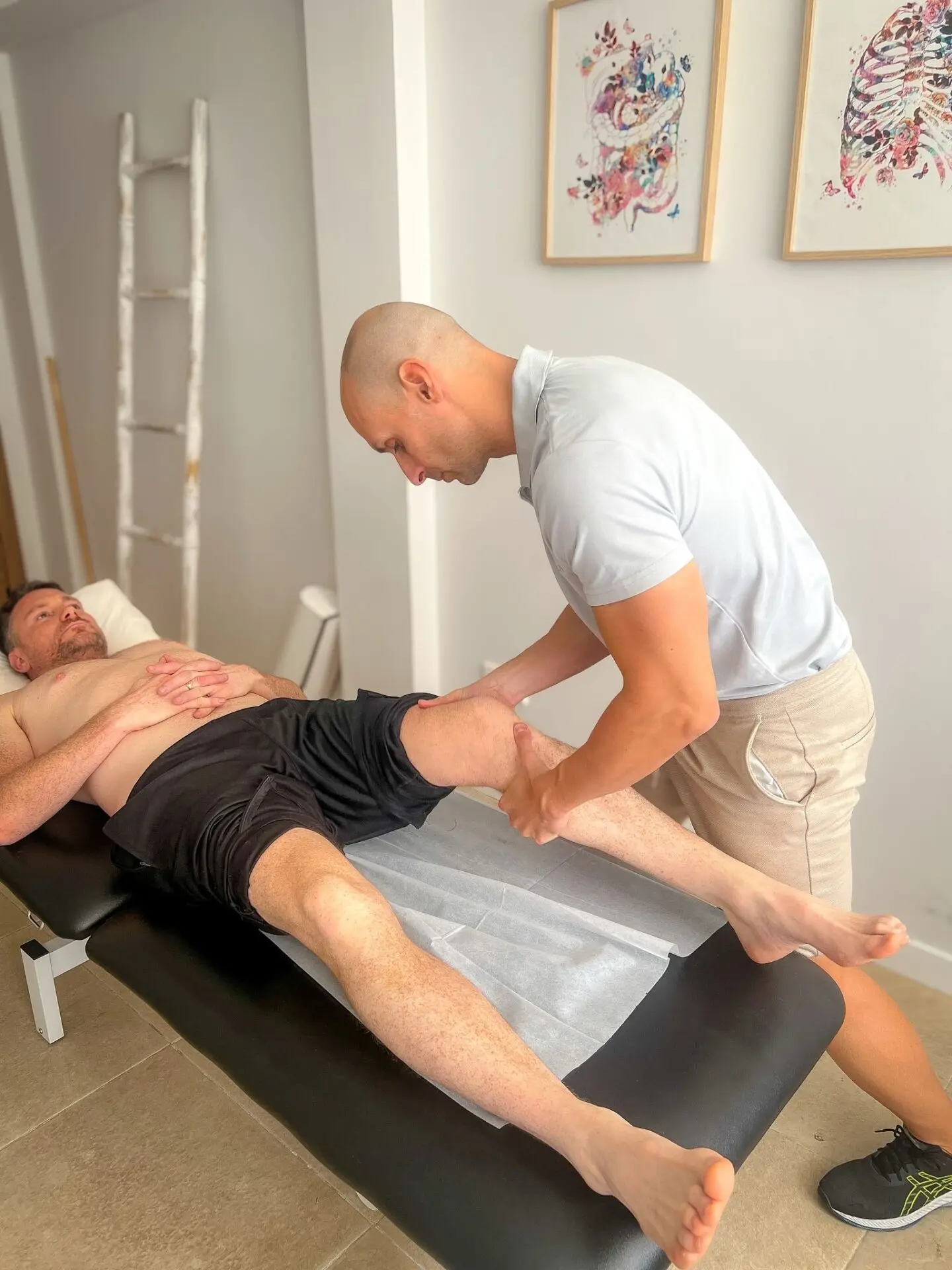
Daniele, our experienced physiotherapist, provides tailored care for meniscus injuries at each stage of recovery.
Pre-surgery rehabilitation
Preparing the knee before surgery can improve outcomes significantly. Targeted physiotherapy at this stage helps to:
- Reduce pain and swelling
- Improve strength and range of movement
- Support a faster post-operative recovery
Post-surgery rehabilitation
After surgery, structured physiotherapy is essential to restore full function. This includes:
- Restoring full range of motion
- Rebuilding muscle strength
- Improving joint stability and movement control
- A safe, progressive return to sport or daily activity
Non-surgical treatment
Where surgery is not required, treatment focuses on:
- Progressive exercise therapy
- Strengthening the quadriceps, hamstrings, and glutes
- Improving movement patterns and neuromuscular control
- A gradual, structured return to activity
This approach frequently achieves excellent outcomes without the need for an operation.
Quick Tip: Strengthening the muscles around the knee, particularly the quadriceps and glutes, is one of the most important aspects of meniscus recovery. Even gentle, pain-free exercises in the early stages help to maintain strength and support the healing process.
How Long Does a Meniscus Injury Take to Heal?
Recovery time varies considerably depending on the type of tear and the treatment approach.
- Mild injuries may improve within a few weeks with appropriate management
- Moderate tears can take several weeks to a few months
- Post-surgical rehabilitation typically takes three to six months
Following a structured rehabilitation programme consistently is key to achieving a full recovery and reducing the risk of re-injury.
When Should You See a Physiotherapist?
Seeking professional assessment sooner rather than later is generally advisable. Book an appointment if you experience:
- Ongoing knee pain that is not settling
- Swelling that does not reduce within a few days
- Locking, catching, or persistent clicking
- Reduced movement or stiffness
- Difficulty with walking, squatting, or climbing stairs
Early treatment prevents symptoms from worsening and gives you the best chance of a swift, full recovery. If you are unsure whether you need imaging before being seen, our guide on whether you need a scan or MRI may help clarify your next step.
Meniscus Rehabilitation at Costa Health
Daniele is an experienced physiotherapist specialising in knee injuries, including meniscal tears. His approach focuses on restoring full function, not simply managing pain.
Patients benefit from:
- Individualised rehabilitation plans
- Evidence-based treatment methods
- Hands-on guidance through every stage of recovery
- A clear, structured progression back to sport or normal activity
Whether you are managing a meniscus injury without surgery, preparing for a procedure, or recovering post-operatively, our physiotherapy team has the expertise to help you move confidently again.
Frequently Asked Questions
Can a meniscus tear heal without surgery?
Yes, particularly if the tear is in the outer third of the meniscus, where blood supply is better. Physiotherapy can optimise the healing environment, reduce symptoms, and help many people return to full activity without surgery.
What happens if you ignore a meniscus tear?
Symptoms may persist or worsen over time. Untreated tears can lead to ongoing pain, reduced function, and an increased risk of developing knee osteoarthritis. Early assessment is advisable.
Is it safe to walk with a meniscus tear?
Walking is usually safe if pain is manageable and there is no locking. However, loading should be progressed carefully under professional guidance to avoid aggravating the injury.
Can I run with a meniscus injury?
Running is generally not recommended in the early stages. A structured rehabilitation programme is needed before returning to impact activities, with progression based on pain, strength, and movement quality.
What movements should I avoid with a meniscus tear?
Deep squatting, twisting, pivoting, and high-impact activities should be limited, particularly during the early phase of recovery. Your physiotherapist will guide you on safe movement as you progress.
How is a meniscus tear diagnosed?
Diagnosis is based on clinical assessment, including movement testing, orthopaedic special tests, and joint line tenderness. Imaging such as MRI may be arranged if the presentation requires further investigation.
Do I need an MRI for a meniscus tear?
Not always. Many cases can be diagnosed clinically. MRI is typically arranged when symptoms are severe, unclear, or not improving as expected. Your physiotherapist can advise whether a referral for imaging is appropriate.
What exercises should I do for a meniscus tear?
Exercises typically focus on quadriceps strength, hamstring control, glute activation, and knee stability, progressed gradually based on your symptoms and recovery stage. A physiotherapist will prescribe the right exercises for your specific presentation.
Can physiotherapy really prevent surgery?
In many cases, yes. Research demonstrates that structured exercise therapy can provide comparable outcomes to surgery for certain types of meniscal tears. The decision should always be made in collaboration with your healthcare team based on your specific injury and circumstances.
How long before I can return to sport?
This depends on the severity of the injury and can range from several weeks to a few months. Progression is based on strength, movement quality, and confidence, with your physiotherapist guiding the process throughout.
Will my knee fully recover?
Most people achieve very good outcomes with appropriate rehabilitation. Full recovery depends on the type and severity of the tear, consistency with the rehabilitation programme, and overall knee health.
Is swelling normal after a meniscus injury?
Yes, swelling is common and typically develops over 24 to 48 hours following injury. Persistent or increasing swelling should be assessed by a physiotherapist.
Can a meniscus tear cause knee locking?
Yes. Certain tear types, such as bucket handle tears, can cause the knee to lock and prevent full movement. This requires prompt assessment and may indicate that surgical management is needed.
What is the difference between medial and lateral meniscus injuries?
Medial meniscus injuries are more common and are often linked to rotational forces. Lateral meniscus injuries tend to occur more frequently in acute trauma and can behave differently in recovery. Your physiotherapist will assess both as part of a thorough evaluation.
What is the best way to sleep with knee pain?
Placing a pillow under or between the knees can help reduce discomfort and maintain a comfortable position. Avoid positions that place the knee in full extension or deep flexion for prolonged periods.